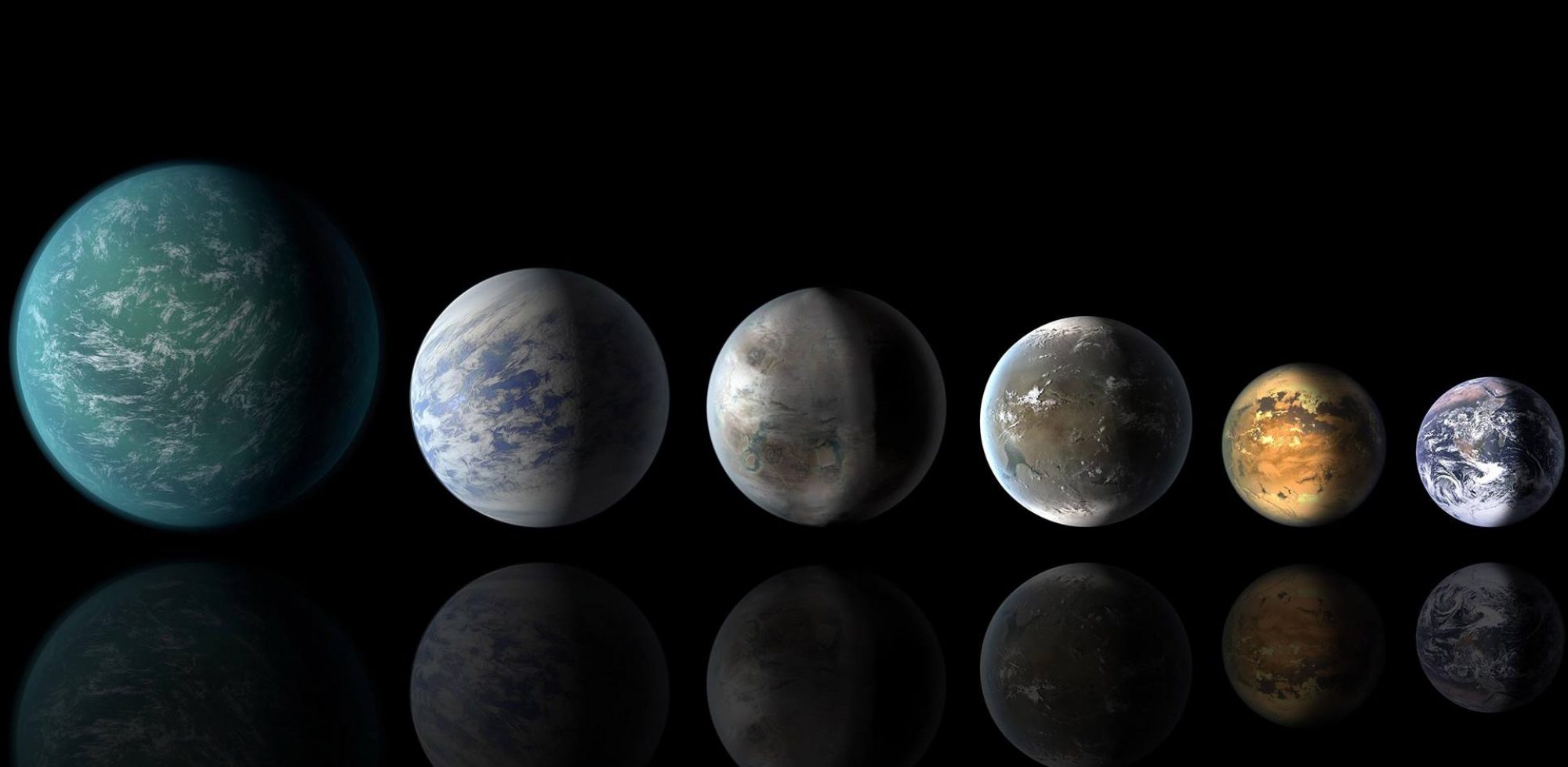

Biosignatures — evidence that says or suggests that life has once been present — are often very hard to find and interpret.
Scientists examining fossilized life on Earth can generally reach some sort of agreement about what is before them, but what about the soft-bodied or even single-celled organisms that were the sum total of life on Earth for much of the planet’s history as a living domain? Scientific disagreements abound.
Now think of trying to determine whether a particular outline on an ancient Martian rock, or a geochemical or surface anomaly on that rock, is a sign of life. Or perhaps an unexpected abundance of a particular compound in one of the water vapor plumes coming out of the moons Europa or Enceladus. Or a peculiar chemical imbalance in the atmosphere of a distant exoplanet as measured in the spectral signature collected via telescope.
These are long-standing issues and challenges, but they have taken on a greater urgency of late as NASA missions (and those of other space agencies around the world) are being designed to actively look for signs of extraterrestrial life — most likely very simple life — past or present.
And that combination of increased urgency and great difficulty has given rise to at least one new way of thinking about those potential signs of life. Scientists call them “agnostic biosignatures” and they do not presuppose any particular biochemistry.
“The more we explore the solar system and distant exoplanets, the more we find worlds that are really foreign,” said Sarah Stewart Johnson, at an assistant professor at Georgetown University and principal investigator of the newly-formed Laboratory for Agnostic Biosignatures (LAB). The LAB team won a five-year, $7 million grant last year from NASA’s Astrobiology Program.
“So our goal is to go beyond our current understandings and find ways to explore the world of life as we don’t know it,” she told me. “That might mean thinking about a spectrum of how ‘alive’ something might be… And we’re embracing uncertainty, looking as much for biohints as biosignatures.”
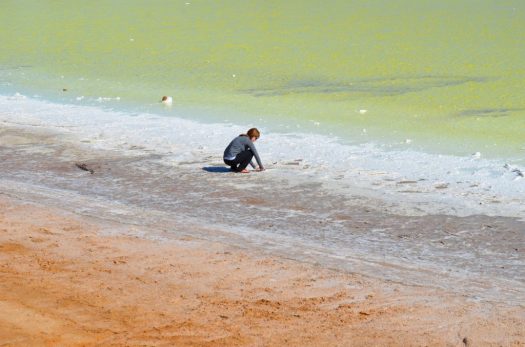
Put another way, LAB deputy principal investigator Heather Graham at NASA’s Goddard Space Flight Center said: “Detecting life in an agnostic fashion means not using characteristics particular to Earth life. We’re working to transform how to measure biosignatures, or signs of life, in and outside of our solar system.”
This is not an easy task, to say the least. It’s somewhat like imaging a color never seen before.
So the foci are on phenomenon like the complexity of chemicals and patterns on rock surfaces, an accumulation of particular elements or compounds and evidence of the transfer of energy — all of it at levels or in distributions different from what might be expected. These are some of the reflected superstructure of life.
Johnson explained what the LAB project is looking for in more detail:
Chemical complexity: “We’re developing new ways to determine chemical complexity using flight capable instrumentation, as recent work suggests there may be a threshold of complexity above which compounds are exceedingly unlikely to form without supporting biological machinery.”
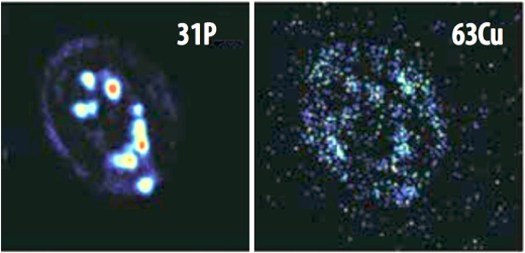
Elemental accumulation: “We’re looking for unexpected concentrations of elements and isotopes in compartments separate from their environments (like cells), as a kind of unexpected disequilibrium that might indicate a life form.”
Evidence of energy transfer: “The electrochemical characteristics of biotic and abiotic redox processes like iron oxidation are notably distinct, and we’re working to develop new kinds of electrochemical probes we could deploy to track those signals.”
None of these underlying dynamics presuppose a specific biochemistry and Johnson said all of the approaches could potentially be used on missions to other planets, moons and asteroids.
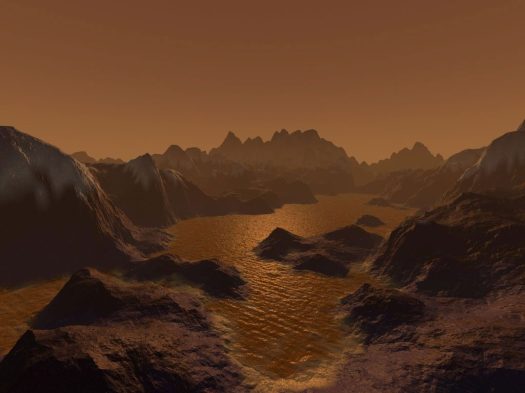
As an example, Johnson said the projects might be especially useful in trying to think about and detect potential life on Saturn’s moon Titan, which has lakes and rivers of ethane and methane as solvents instead of water. NASA recently selected the “Dragonfly” mission to Titan as a New Frontiers endeavor, with a prospective launch date of 2026.
Johnson said she and her LAB colleagues are already beginning to have conversations with members of the Dragonfly team about “life as we don’t know it.”
Given these goals, Johnson’s LAB is, and has to be, broadly interdisciplinary. The team includes biologists, chemists, computer scientists, mathematicians, and instrument engineers — many of them prominent researchers in their fields.
They include Paul Mahaffy of the Goddard Space Flight Center who is principal investigator of one of the major instruments on the Curiosity rover; Barbara Sherwood Lollar of the University of Toronto and 2018 Chair of the United States National Academy of Sciences Review for the Strategy for Astrobiology and the Search for Life in the Universe; and Lee Cronin of the University of Glasgow, who has a long-time interest and high-profile track record regarding complex chemical systems and efforts to construct functioning and complex molecular systems that are not based on biologically derived building blocks.
They and others in LAB are a team of stars known for thinking outside the box, for bringing insights from their scientific disciplines to help identify potential extraterrestrial biosignatures beyond the molecular framework of the life we know of here on Earth.
The team is also designing tools for detecting these signatures and strategies for interpreting them.
Johnson said that while most of the group’s work is in the lab, the project also includes substantial field work at sites where extreme and ancient life can be found. An example is the Kidd Creek Mine in Ontario, where a team will be descending soon into one of the world’s deepest mines to test some of their approaches on deep subsurface rocks.

To further explain some of the meaning of agnostic biosignatures, she referred to Mars missions and what scientists have traditionally looked for.
For instance, the Sample Analysis on Mars instrument on the Curiosity rover, as well as the Mars Organic Molecule Analyzer on the upcoming ExoMars mission, both have the ability to detect patterns of the molecular weights of fatty acids – a staple of Earth biochemistry.
Johnson says that’s a fantastic capability, with the potential to produce extremely compelling results. The instruments can also potentially detect the degraded molecular remains of a once-living organism.
“If we were to discover really complex molecules in the data – even if they had lost some their functional groups, even if they weren’t the exact same chemicals that once were inside a living organism – we could potentially still see the backbones of those molecules and we might still be able reconstruct what they were.” she said.
“And if we observed a high level of complexity, it could be a strong sign that something interesting is going that might not be abiotic in origin.” (In other words, that the compounds were once part of biology.)
That way of looking for biosignatures, she said, might also have implications for the samples that will collected by NASA’s Mars 2020 rover mission for return to Earth.
Complexity is one of the key features the LAB team is focused on because life tends to create complex molecules. “Complexity may not in itself provide definitive answers,” Johnson said, “but repeated detections of complex molecules above a particular level are definitely intriguing.”
A recent report from the National Academies of Sciences, Engineering and Medicine concluded that NASA should ramp up efforts to develop technologies capable of detecting life beyond Earth to use on future missions. The report, intended to help NASA develop its science strategy and research goals for the next 20 years, also urged the agency to encourage scientific collaborations that include a broad range of experts outside of traditional space sciences.
Partly as a response to the National Academies report, Johnson is also co-leading a newly-formed NASA astrobiology initiative called the Network for Life Detection (NfoLD) that aims to bring together an even wider range of scientists to work on biosignatures.
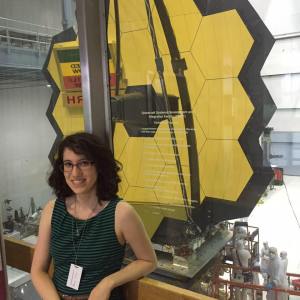
Joining Johnson and myself at the recent Astrobiology Science Conference (AbSciCon) outside of Seattle was Giada Arney, a research space scientist at the Goddard Space Flight Center. She is an early career scientist with a strong interest in detecting potential signs of life in distant exoplanet atmospheres.
The key biosignature to look for has long been oxygen — an element which quickly bonds with other elements and compounds. So for there to be lots of free oxygen in an atmosphere — as there is on Earth — then something has to be producing it such as plants and cyanobacteria. Methane and ozone are in a similar category, and so a detection of those chemicals in a distant atmosphere would potentially a sign of life — or so it used to be presented.
But as the era of extraterrestrial life detection has evolved, scientists have found numerous ways for these supposedly telltale chemicals to be produced without life. An already difficult job became much harder.
“We know we’ll never find an exoplanet just like the Earth, or with a exoplanet biosphere like Earth’s,” Arney told me. “Our planet is a phenomenally great starting point, but we have to think more broadly about what life does to an atmosphere in a remotely detectable way and across interstellar distances.”
“We don’t presuppose any type of metabolisms that might have evolved on an exoplanet we’re examining. Metabolisms are so important because they’re the processes that will modify atmospheres in a profound way — producing chemicals we’ll be looking for like oxygen and methane.”
“What we’re trying to do is find atmospheres that can’t be explained without invoking life, or really hard to do without invoking life. Once we find interesting atmospheres, we’ll throw chemistry at them and physics at them and geology at them and photochemistry at them to better understand whatever we observed.”
“If all of these processes and more, added up together with all that we know about the planet, can’t explain the mix of gases we see in the atmosphere, then we might have to throw biology at the problem.”
In other words, in the world of agnostic biosignatures, life is really the last option to explain a result after everything else has been tried and found to be wanting.
 Many Worlds