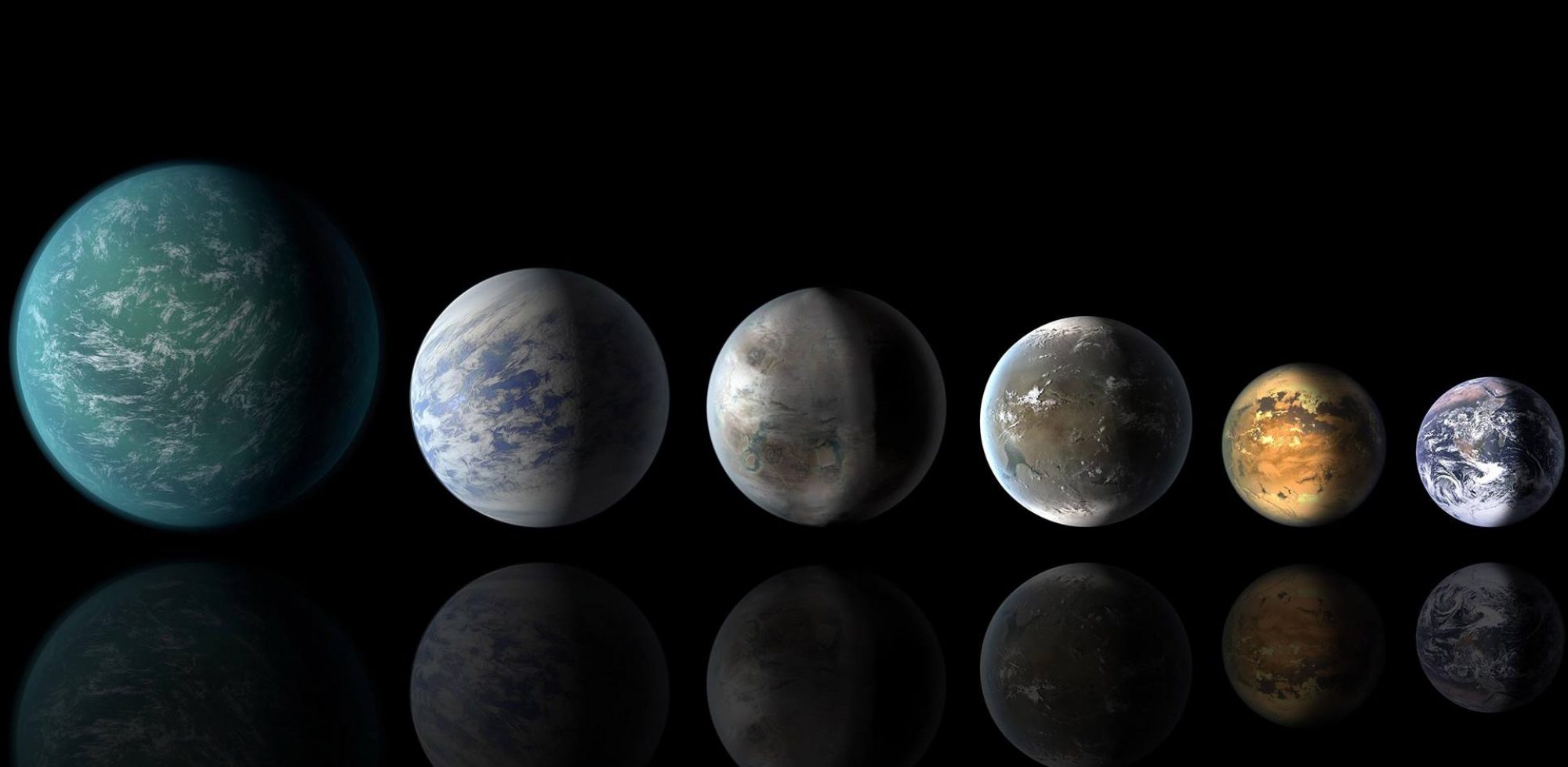
NASA should begin developing a mission that can tell us whether life in the near galaxy is abundant, rare or essentially absent, The National Academy of Sciences recommended yesterday.
The call for a next Grand Observatory telescope with this ambitious goal represents the first time that the Academy, in its Decadal Survey for Astronomy and Astrophysics, has given top priority to the science of exoplanets and the search for life far beyond Earth.
The long-awaited NAS survey did not select a single mission concept, although several NASA-commissioned studies were extensively researched and assembled for the Decadal over the past four years.
Rather, they set the science goal of giving an answer – as complete as possible – to the eternally-asked question of whether life exists solely on Earth or can be found on the billions of other planets we now know orbit their own suns.
Decadal steering committee co-chair Robert Kennicutt Jr., a professor at University of Arizona and Texas A & M University, said that a flood of discoveries and astronomical and technological advances in recent decades made clear that the time for such a mission had come.
“We’re laying down a marker here,” Kennicutt said in a press conference. “We think that progress in this field has taken us to the point that within the planning horizon of this survey, we can really contemplate imaging Earth-like planets in their habitable zones around other stars and spectroscopically studying them for atmospheric composition, perhaps including biomarkers. with the ultimate goal of answering one of the most profound questions: Are we alone in the universe?”
The proposed mission, he said, would as a result have the transformative scientific power of the Hubble Space Telescope and the James Webb Space Telescope, which is scheduled to launch next month. It would change the way that scientists and citizens see the world.

But the road to an actual mission will be long and definitely uphill.
To understand why the mission will be so challenging, consider this:
The telescope will need to focus on small, rocky planets tens of lightyears away that are close to their suns — the kind of “exo-Earths” seen as the most likely to harbor life. The stated goal is to study 100 or more stars and their solar systems to find the best candidates for an intensive look.
And after that solar system survey, about 25 of the most promising “exo-Earths” would be studied in depth, and in many different wavelengths, to determine if they have molecules in their atmospheres associated with a biosphere — water, oxygen, methane, ozone and carbon dioxide and monoxide.
The telescope would have to use a next generation of direct imaging to observe and analyze those stars, solar systems and planets — a demanding task that requires the collections of a vast number of photons, and therefore a large telescope mirror. Earth is 10 billion times fainter than our sun and an “exo-Earth” would probably be similarly faint.
Given the limits to current direct imaging, it is not surprising that almost all exoplanets detected so far have be discovered indirectly via their effects on host stars and starlight. Those very few directly-imaged exoplanets have been very large and distant from their star.
Along with a telescope that is very large and with the highest resolution ever achieved, the project also needs a coronascope to block out the blinding light of the host star. That essential ability to block out enough starlight to allow small and close-in planets to become detectable to the telescope is also seen as decades away.
As part of their recommendations, the Decadal Survey steering committee asked for the establishment of a substantial NASA research and development program for this project and other future large space telescope efforts.
The proposed Great Observatories Mission and Technology Maturation Program would bring significant changes to how major projects are planned and developed. As Kennicut described it, the astronomy community has entered a time when the largest projects are “pan-decadal and multi-generational,” and the development process has to take that into account.
Under the timeline envisioned in the report, scientists and engineers would spend an estimated six years determining if the technology exists to allow development of a telescope that could find those 25 potential “exo-Earths,” and at an agreed price (about $11 billion.) If it can be built, the report estimates a launch in the mid 2040s.

The Decadal study based their recommendations for the next Grand Observatory mission on data and analysis provided from two NASA-established concept studies — each developed by substantial (and volunteer) teams over four years. The largest is LUVOIR (the Large UV Optical Infrared Surveyor) and the smaller is the Habitable Exoplanet Observatory (HabEx.)
While LUVOIR proposed two versions of their telescope with 15-meter and 8-meter mirrors, the HabEx proposal called for a 4-meter mirror. What the Survey steering committee concluded was scientifically and financially feasible is a mirror of about 6 meters — about the size of the James Webb Space Telescope mirror. But it would have many of the of the capabilities of the smaller LUVOIR concept and, as a result, is described as an “infrared/optical/ultraviolet (IR/O/UV) telescope.” What makes the name different from LUVOIR is only that it’s missing the “L” for “large.”
The Decadal report as a whole won some quick praise. Keck Observatory Chief Scientist John O’Meara, for instance, said the study is a “very optimistic document” that sets NASA and the nation on an historic pathway.
Even though he had advocated for the largest, 15-meter version of LUVOIR, he said “I’m pragmatic and understand their thinking. And LUVOIR is not a number but a vision, and they adopted that.”
O’Meara and others emphasized that the Decadal report only offers guidelines. It will be up to NASA, scientists and engineers to determine the size and power of the telescope, based on the technology they can develop and the funding available.
Scott Gaudi, professor of astronomy at Ohio State University and community co-chair of the HabEx study group, said he “never expected them to advocate for ‘HabEx’ or ‘LUVOIR,’ but rather I hoped that they would do exactly what they did: prioritize a mission that could accomplish those science goals.”
The HabEx proposal was judged by the Decadal panel to not have the power needed to discover enough “exo-Earths” to make a convincing science case for life beyond Earth, while LUVOIR-B as proposed would have taken too long to develop and build.
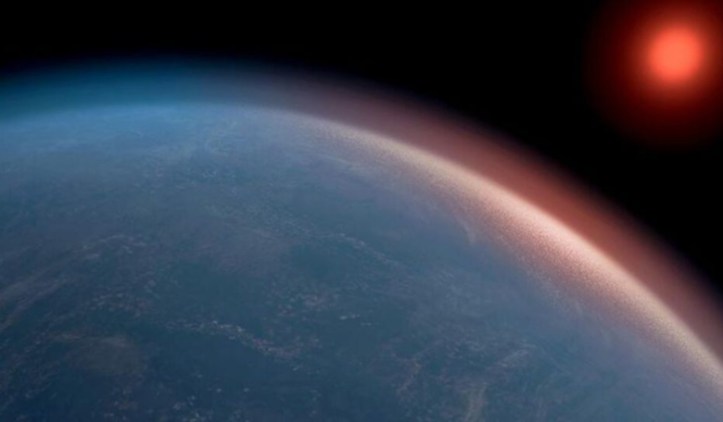
The question of how big and powerful a telescope is needed to find evidence of extraterrestrial life remains an ongoing issue. Unprecedented resolution and precision is required to find distant small rocky exoplanets and to spectrographically analyze their atmospheres. That precision will also determine the uncertainty associated with those readings, since the discovery of an inhabited exoplanet will be based on probability rather than the observation of a living creature.
Along with the priority exoplanet mission, the Decadal Survey also strongly recommends the future development of two other proposals that came before it — the Origins Space Telescope and the Lynx X-Ray Observatory projects.
Origins is a far-infrared surveyor space telescope mission designed to study star formation and the interstellar medium, while Lynx would be the most powerful x-ray observatory ever constructed and would focus on galaxy formation and evolution and the energetic properties of star systems.
As described in the Survey report, maturation work on these projects would not begin until the middle or end of the decade, when the feasibility of the exoplanet mission is established. But however that comes out, the Decadal Survey calls for the Origins and Lynx projects to then go forward and to become part of a grand effort that includes the exoplanet telescope (which also has astrophysical capabilities.)
Astrobiologist Shawn Domagal-Goldman of the Goddard Space Flight Center, who was a member of both the LUVOIR and HabEx study teams, said the groups operated as a largely standalone effort and didn’t focus on what the Origins or Lynx projects could offer.
“But the Decadal recommendations call for growth in the fleet of Great Observatories,” he said. “That means optimizing the science return in the future should be done at that level — of a larger program based on that growing fleet.”
He also said that both Origins and Lynx had a lot to offer regarding exoplanets based on their deep focus on the formation, evolution and dynamics of stars.
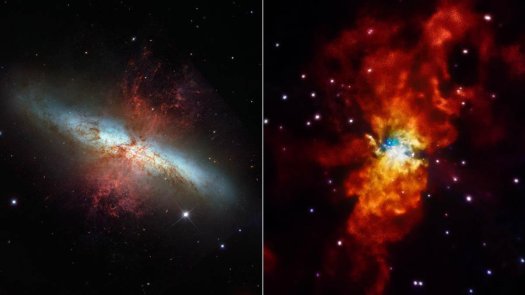
While the priority given to exoplanets, finding life beyond Earth and expanding the fleet of Grand Observatory missions dominates the new Decadal report, the Academy also offered recommendations on a number of other topics, from how the National Science Foundation uses its funding to the need to invest more in the ground-based Giant Magellan Telescope in Chile and the 30-Meter Telescope in Hawaii, which will play an important role in searching for signatures of life around smaller, red dwarf stars.
The report is 614-pages long and addresses many astronomy and astrophysics issues other than its priority exoplanet Flagship mission. Fiona Harrison of the California Institute of Technology and co-chair of the Decadal steering committee, said that more than 800 white papers on related astronomy, astrobiology and astrophysics topics had been submitted to the Survey, a sign that the effort engaged and reflected the views of the community as a whole.
For that reason, NASA almost always follows its guidelines for setting priorities, which then go to the White House and Congress to approve.
The National Academy of Sciences is a nonprofit, non-governmental organization.
 Many Worlds
3 Replies to “NASA Should Build a Grand Observatory Designed to Search For Life Beyond Earth, Top Panel Concludes”
Comments are closed.