What can get the imagination into super-drive more quickly than the crashing of really huge objects? Like when a Mars-sized planet did a head-on into the Earth and, the scientific consensus says, created the moon. Or when a potentially dinosaur-exterminating asteroid heads towards Earth, or when what are now called "near-Earth objects" seems to be …
A Flood of Newly Confirmed Exoplanets
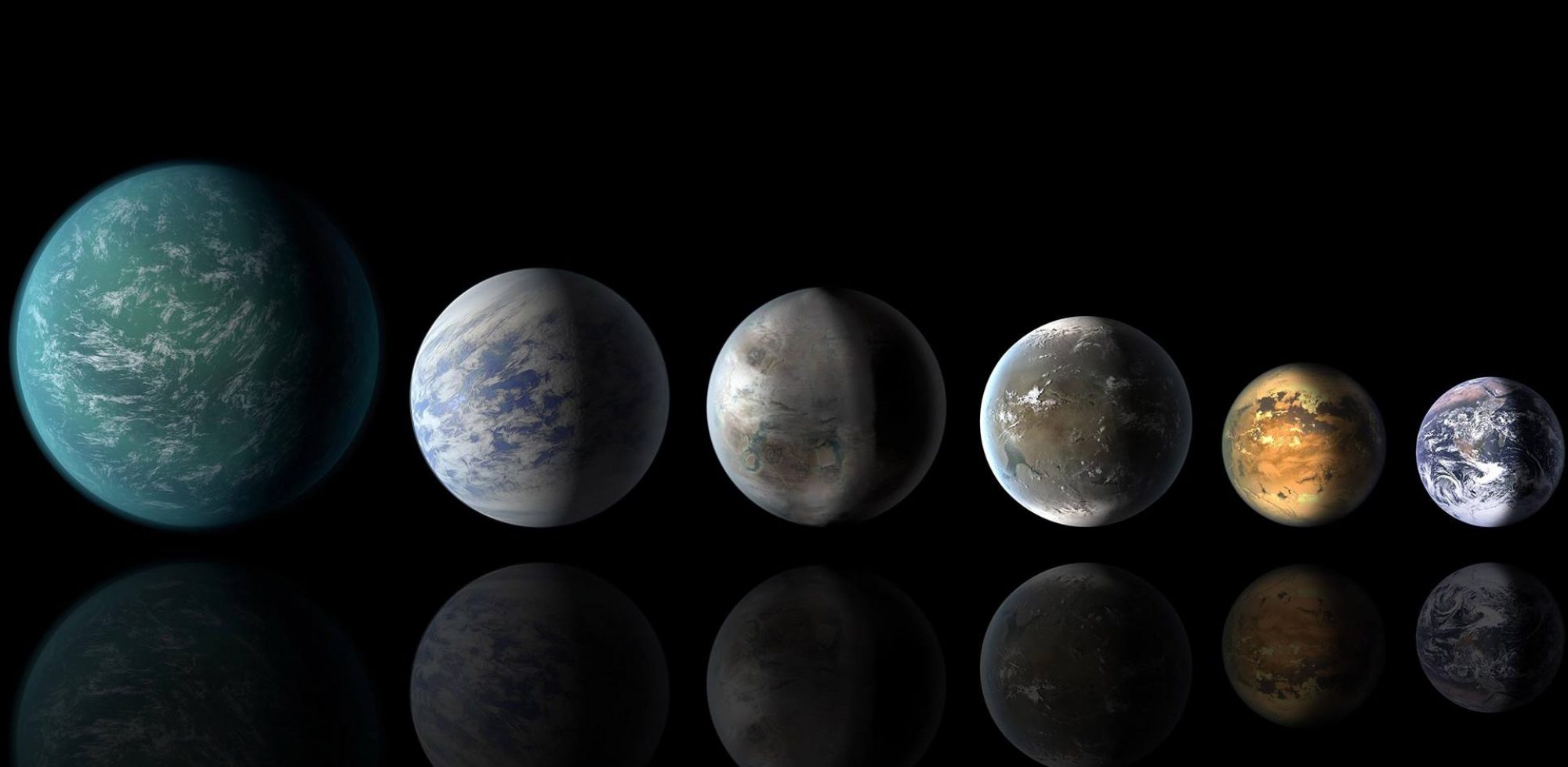
In the biggest haul ever of new exoplanets, scientists with NASA's Kepler mission announced the confirmation of 1,284 additional planets outside our solar system -- including nine that are relatively small and within the habitable zones of their host stars. That almost doubles the number of these treasured rocky planets that orbit their stars at …
Out of the Stovepipes and Into the Galaxy
This “Many Worlds” post is written by Andrew Rushby, a postdoctoral fellow from the United Kingdom who recently began working with NASA's NExSS initiative. The column will hopefully serve to both introduce this new NExSS colleague and to let him share his thoughts about the initiative and what lies ahead. I’m most excited to join …
Continue reading "Out of the Stovepipes and Into the Galaxy"
A Dwarf Star, Trappist-1, Produces a Major Discovery
The detection of potentially habitable exoplanets is not the big news it once was -- there have been so many identified already that the novelty has faded a bit. But that hardly means surprising and potentially breakthrough discoveries aren't being made. They are, and one of them was just announced Monday. This is how the …
Continue reading "A Dwarf Star, Trappist-1, Produces a Major Discovery"
Storming the One-Meter-Per-Second Barrier
When the first exoplanet was identified via the radial velocity method, the Swiss team was able to detect a wobble in the star 51 Pegasi at a rate of 50 meters per second. The wobble is the star's movement back and forth caused by the gravitational pull of the planet, and in that first case …
Continue reading "Storming the One-Meter-Per-Second Barrier"
Ranking Exoplanet Habitability
Now that we know that there are billions and billions of planets beyond our solar system, and we even know where thousands of confirmed and candidate planets are located, where should we be looking for those planets that could in theory support extraterrestrial life, and might just possibly support it now? The first order …
The Habitable Zone Gets Poked, Tweaked and Stretched to the Limits
For more than 20 years now -- even before the first detection of an extra-solar planet -- scientists have posited, defined and then debated the existence and nature of a habitable zone. It's without a doubt a central scientific concept, and the idea has caught on with the public (and the media) too. The discovery …
Continue reading "The Habitable Zone Gets Poked, Tweaked and Stretched to the Limits"
The Search for Exoplanet Life Goes Broad and Deep
I had the good fortune several years ago to spend many hours in meetings of the science teams for the Curiosity rover, listening in on discussions about what new results beamed back from Mars might mean about the planet's formation, it's early history, how it gained and lost an atmosphere, whether it was a place …
Continue reading "The Search for Exoplanet Life Goes Broad and Deep"
Cloudy, With a Chance of Iron Rain
From an Earth-centric point of view, rain of course means falling water. We can have storms with falling dust -- I experienced a few of those while a reporter in India -- but rain is pretty much exclusively H2O falling from the clouds. But as the study of exoplanets moves aggressively into the realm …
Shredding Exoplanets, And The Mysteries They May Unravel
One of the seemingly quixotic goals of exoplanet scientists is to understand the chemical and geo-chemical compositions of the interiors of the distant planets they are finding. Learning whether a planet is largely made up of silicon or magnesium or iron-based compounds is essential to some day determining how and where specific exoplanets were …
Continue reading "Shredding Exoplanets, And The Mysteries They May Unravel"
 Many Worlds