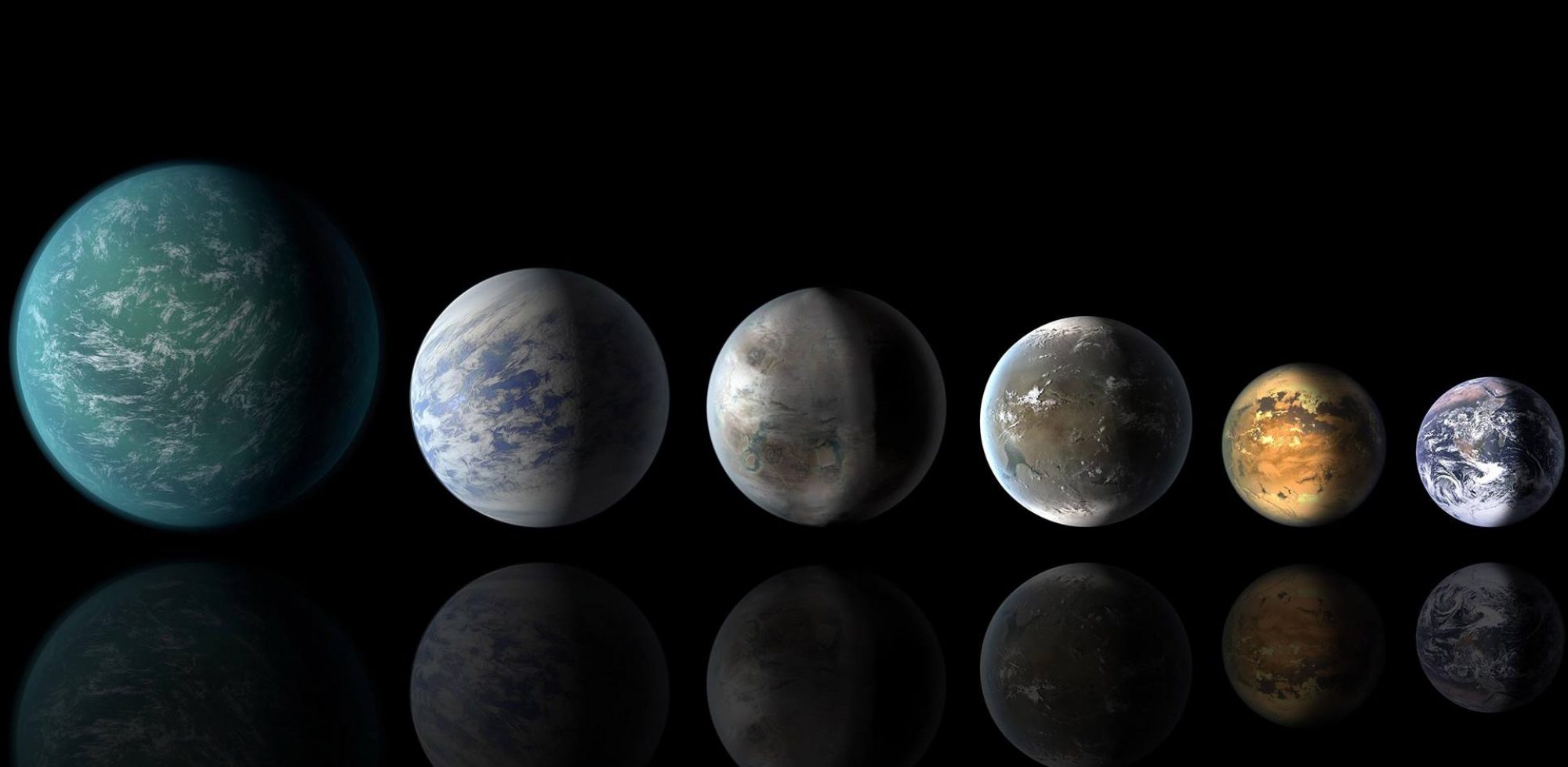
A Close Exoplanet Found That May Have An Atmosphere Ideal For Study

Different methods of searching for and finding distant exoplanets give different information about the planets found. The transit method -- where an exoplanets passed in front of its sun and dims the bright sunlight ever so slightly -- gives astronomers not only a detection but also its radius or size. The radial velocity method -- …

NASA’s Perseverance Rover Lands on Mars — The Third Martian Arrival in a Week

Mars is receiving visitors these days.  Quite a few of them. The most prominent visitor is NASA's Perseverance rover,  which made a difficult but smooth precision landing at 3.55 ET  this afternoon. The rover now sits in Jezero Crater, in an area that clearly once had lots of water flowing.   The site was selected, in …

Surprising Insights Into the Asteroid Bennu’s Past, as OSIRIS-REx Prepares For a Sample-Collecting “Tag”

Long before there was an Earth, asteroids large and small were orbiting our young sun.  Among them was one far enough out from the sun to contain water ice, as well as organic compounds with lots of carbon.  In its five billion years or so as an object,  the asteroid was hit and broken apart …

Everything Changes: The Rise and Fall of the Northern Ocean of Mars

Change is the one constant in our world-- moving in ways tiny and enormous,  constructive and destructive. We're living now in a time when a rampaging pandemic circles the globe and when the climate is changing in so many worrisome and potentially devastating ways. With these ominous  changes as a backdrop, it is perhaps useful …

On The Frontier Of The Hunt For Signs Of Life On Early Earth And Ancient Mars

Seldom does one rock outcrop get so many visitors in a day, especially when that outcrop is located in rugged, frigid terrain abutting the Greenland Ice Sheet and can be reached only by helicopter. But this has been a specimen of great importance and notoriety since it appeared from beneath the snow pack some eight …

Exoplanets With Complex Life May Be Very Rare, Even in Their “Habitable Zones”

  For years now, finding planets in the habitable zones of their host stars has been a global astrophysical quest and something of a holy grail.  That distance from a star where temperatures could allow H20 to remain liquid some of the time has been deemed the "Goldilocks" zone where life could potentially emerge and …