It took a while -- almost five years since launch -- but the Juno spacecraft is now at Jupiter and orbiting the giant planet. A 35-minute rocket burn to slow Juno down from its record-breaking 130,000 mph entry speed led to a successful insertion into orbit just minutes before midnight, making it another July 4th …
Exoplanet Biosignatures: Crucial and Confounding
Early in the Curiosity rover's trek across Gale Crater on Mars, team member and Los Almos National Laboratory planetary scientist Nina Lanza reported finding surprisingly high concentrations of the mineral manganese oxide. It was showing up as a blackish-purple fill to cracks in rocks, and possibly as a surface covering to others. Lanza, who had …
Continue reading "Exoplanet Biosignatures: Crucial and Confounding"
Juno, Jupiter and Exo-Jupiters
The last NASA mission to orbit Jupiter, the Galileo, was designed, flown and its data analyzed as if it was circling the only Jupiter in the sky. This is hardly surprising since the spacecraft launched in 1989, before the exoplanet era had arrived. Ironically, Galileo entered its Jupiter orbit in late 1995, just a few …
A Flood of Newly Confirmed Exoplanets
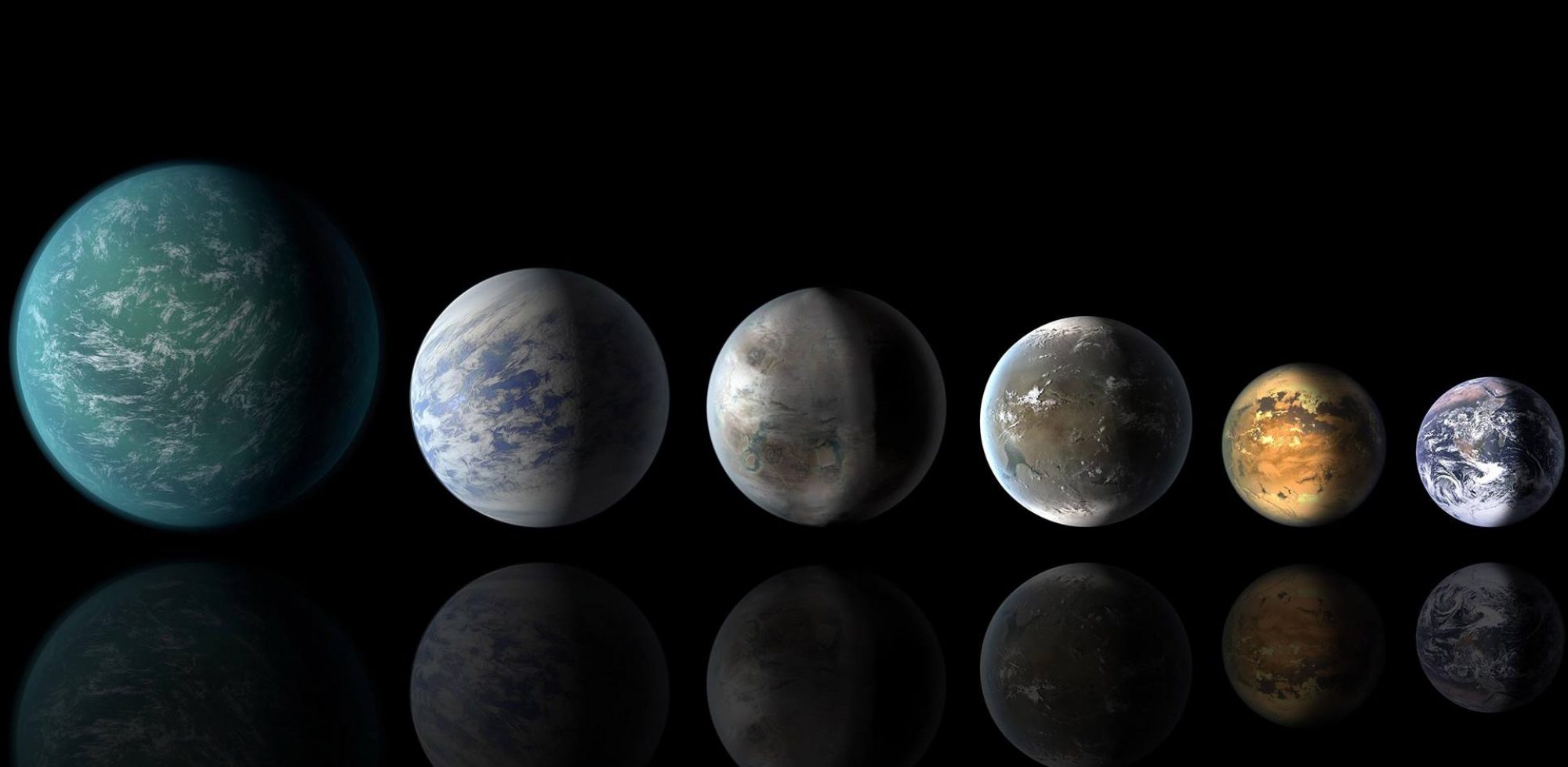
In the biggest haul ever of new exoplanets, scientists with NASA's Kepler mission announced the confirmation of 1,284 additional planets outside our solar system -- including nine that are relatively small and within the habitable zones of their host stars. That almost doubles the number of these treasured rocky planets that orbit their stars at …
Out of the Stovepipes and Into the Galaxy
This “Many Worlds” post is written by Andrew Rushby, a postdoctoral fellow from the United Kingdom who recently began working with NASA's NExSS initiative. The column will hopefully serve to both introduce this new NExSS colleague and to let him share his thoughts about the initiative and what lies ahead. I’m most excited to join …
Continue reading "Out of the Stovepipes and Into the Galaxy"
Storming the One-Meter-Per-Second Barrier
When the first exoplanet was identified via the radial velocity method, the Swiss team was able to detect a wobble in the star 51 Pegasi at a rate of 50 meters per second. The wobble is the star's movement back and forth caused by the gravitational pull of the planet, and in that first case …
Continue reading "Storming the One-Meter-Per-Second Barrier"
Hunting for Exoplanets Via TESS
Seven years ago this month the Kepler spacecraft launched into space – the first NASA mission dedicated to searching for planets around distant stars. The goal was to conduct a census of these exoplanets, to learn whether planets are common or rare. And in particular, to understand whether planets like Earth are common or …
The Habitable Zone Gets Poked, Tweaked and Stretched to the Limits
For more than 20 years now -- even before the first detection of an extra-solar planet -- scientists have posited, defined and then debated the existence and nature of a habitable zone. It's without a doubt a central scientific concept, and the idea has caught on with the public (and the media) too. The discovery …
Continue reading "The Habitable Zone Gets Poked, Tweaked and Stretched to the Limits"
The Search for Exoplanet Life Goes Broad and Deep
I had the good fortune several years ago to spend many hours in meetings of the science teams for the Curiosity rover, listening in on discussions about what new results beamed back from Mars might mean about the planet's formation, it's early history, how it gained and lost an atmosphere, whether it was a place …
Continue reading "The Search for Exoplanet Life Goes Broad and Deep"
Movement in The Search For ExoLife
Assuming for a moment that life exists on some exoplanets, how might researchers detect it? This is hardly a new question. More than ten years ago, competing teams of exo-scientists and engineers came up with proposals for a NASA flagship space observatory capable of identifying possible biosignatures on distant planets. No consensus was reached, however, …
 Many Worlds