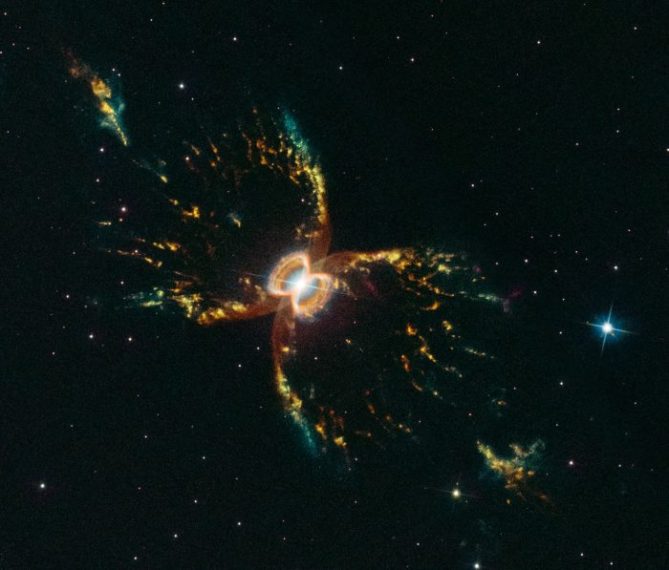
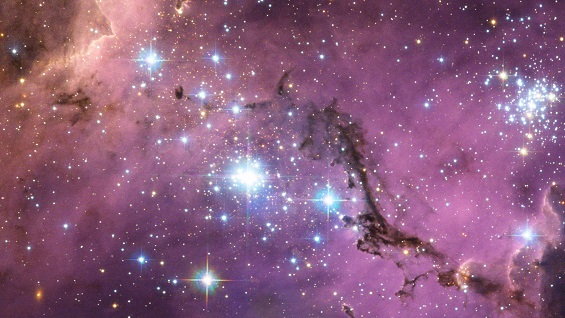
The Hubble Space Telescope, arguably the jewel in the crown of NASA’s science missions, was launched 29 years ago. It has been providing scientists and the public with a steady stream of previously unimagined insights about the cosmos — plus those jaw-dropping, very high-resolution images like the one above — pretty much ever since.
It has also provided the best example to date of what humans can do in space with its five repair and upgrade missions. It did indeed launch to great skepticism, especially after a near fatal flaw was found in its key mirror. It was also considered over budget at launch, way behind schedule and questionable scientifically and had to be fixed in orbit 353 miles into space.
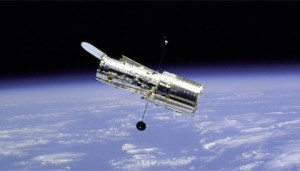
But almost three decades into its mission now — and with decades more service likely — it clearly shows what an exceedingly ambitious project can deliver and the level of excellence that NASA, its European Space Agency partner and space scientists and engineers can achieve. Talk about soft power.
This is important to remember as the agency’s 40-year-old Great Observatories program –that the Hubble Telescope is a part of –is under considerable threat.
The mission that was supposed to fly in the 2010s, the James Webb Space Telescope, is also way over budget, way behind schedule, and now described as a financial threat to other NASA missions. The planned Great Observatories mission of the 2020s, the Wide Field Infrared Survey Telescope (WFIRST) has been cancelled twice now by the Trump Administration and has been restored by Congress once. Whether that will happen again is unclear.
And the process of selecting a mission for the 2030s is well underway and four proposals will be going next year to the Astro2020 Decadal Survey for review and later selection by the National Research Council of the National Academies of Science. This selection will be taking place at a time that the NASA science budget is projected by the administration to decline as more money is directed to a proposed set of missions and projects at and near the moon.
Can proper follow-ons to the Hubble come from all this?
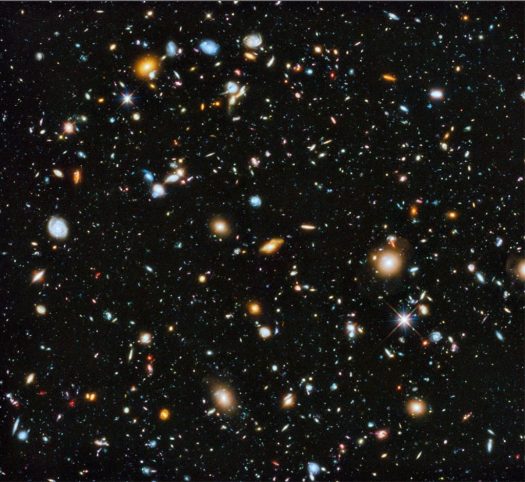
The answer is definitely yes, if….
The first obstacle to a continuing Great Observatories program is the budget fight in Washington over whether WFIRST should fly.
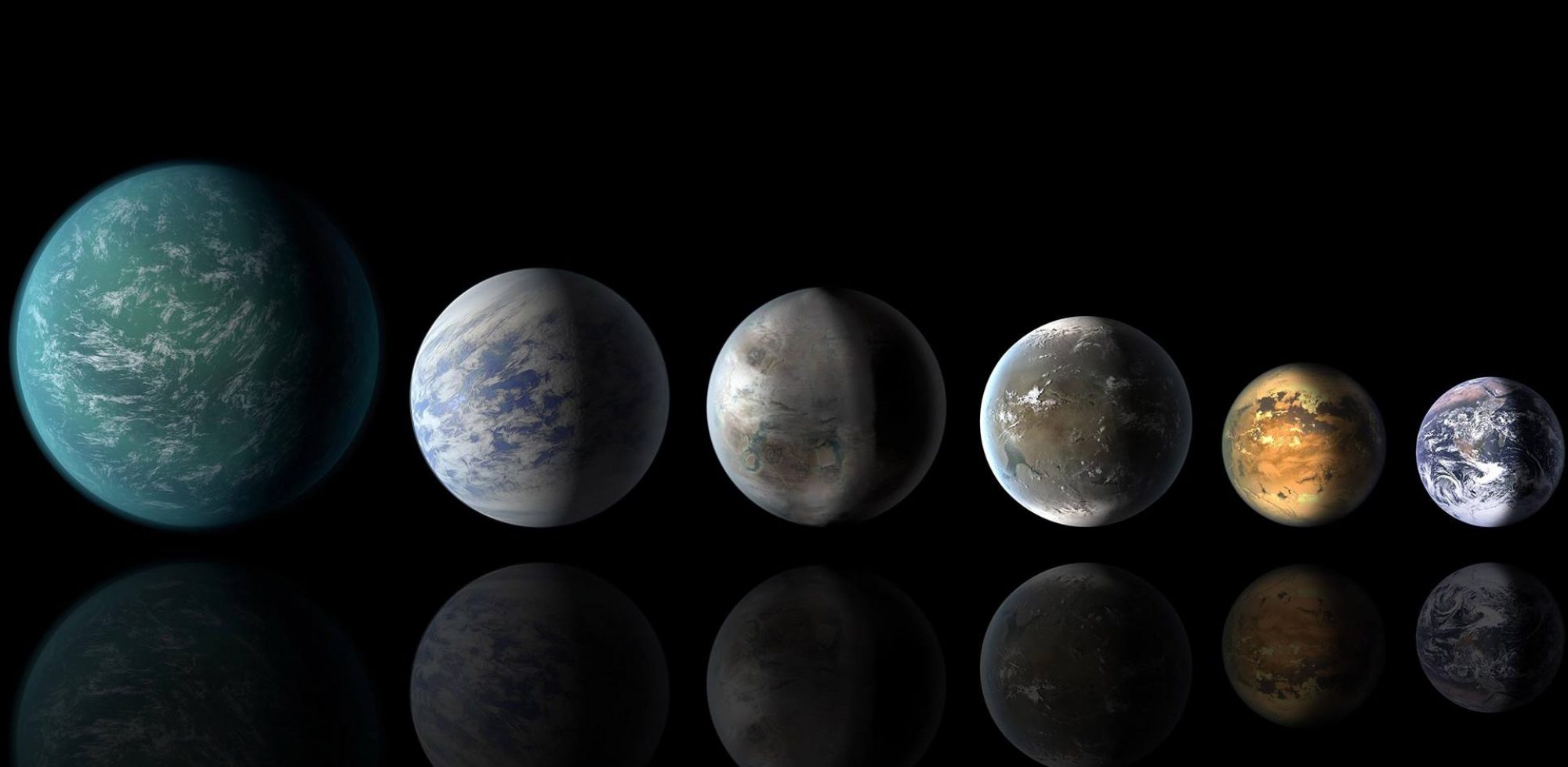
WFIRST was initially a dark matter mission, but with additions has become a potentially important exoplanet telescope, too. It will have the precision of the Hubble and a much wider field of view. It also carries the first orbital coronagraphic instrument that uses novel starlight-suppressing technology in a high-contrast, small field-of-view camera and spectrometer that can potentially image and characterize Neptune-to-super-Earth-sized planets.
Scientists are bullish on the many astrophysical and exoplanet capabilities of the mission; orbiting observatories, both “Great” and less ambitious, avoid the distortions of the Earth’s atmosphere and so are precious. As a result, many space scientists were alarmed when WFIRST was left off the Trump budget for NASA. Congress intervened last year and saved the program, but the mission was again cancelled by the president earlier this year. Congress has yet to respond.
Almost as important as the potentially lost science capability should WFIRST be ultimately cancelled is the space policy implications. WFIRST was selected as the top choice in the large mission category in the 2010 Decadal Survey, and for decades that has meant a mission will go forward.
So an actual full cancellation would threaten the entire process through which NASA missions are selected — a prospect that makes the astronomy community very concerned.
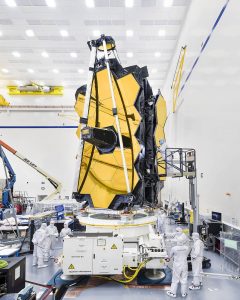
The reason given for the administration’s desire to cancel WFIRST is that the James Webb Telescope – a far more ambitious, costly and pioneering — needs more unplanned funding. Nothing even close to the Webb has ever been launched into space, and the cutting-edge nature of the endeavor has left it prone to major delays and cost overruns.
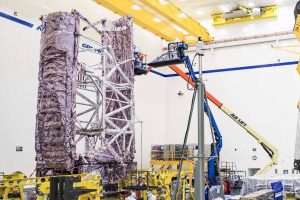
(NASA’s Goddard Space Flight Center/Chris Gunnspace)
First approved in 1998 with a budget of about $1 billion and a launch date of 2007, the Webb is now scheduled to launch in 2021 with a budget of $9.66 billion. (Both ESA and the Canadian Space Agency are partners in the Webb.)
For an observatory with the capabilities of Webb — which will offer new ways to study the ancient cosmos, the birth of stars, galaxies and planetary systems, as well as the characteristics of exoplanets — cancelling that mission does not appear to be an option. And the administration says a cancelled WFIRST is where the extra money should come from.
But there is another budgetary dynamic at play at NASA, and that’s the large increases proposed for the mission to the moon that Vice President Mike Pence recently said needs to be accomplished by 2024. Along with that mission is a proposed “Gateway” station that will be built near the moon and will serve as a staging ground.
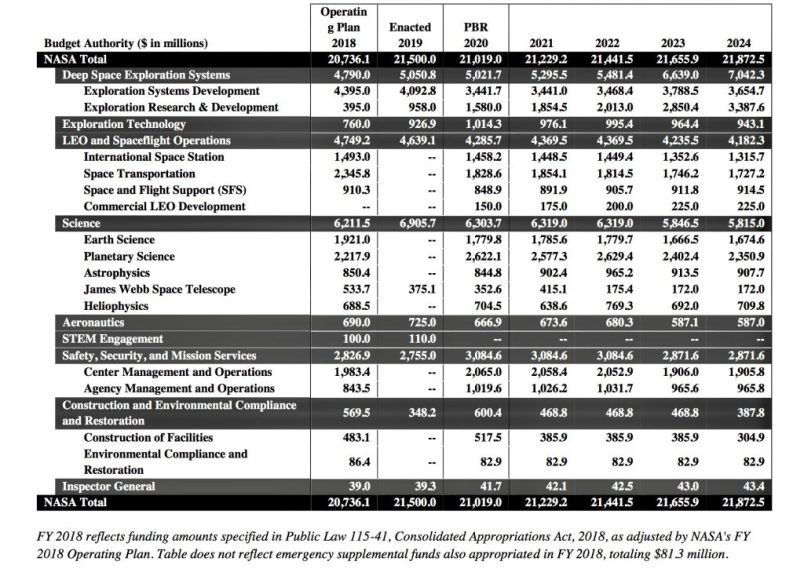
The budgetary consequences are pretty stark, as outlined in the White House funding proposal. The budget for deep space exploration systems goes up from a current $5.05 billion to $7.04 in 2024. Since the overall projected NASA budget remains basically steady from fiscal 2019 to fiscal 2024, the money has to come from somewhere else. And the NASA division that would take the hit is Science, which declines from $6.9 billion in 2019 to $5.81 billion in 2024.
Congress may well make some changes in the request. But the unless new money comes to NASA (and that is possible but unlikely) then a push to send astronauts into deep space would have to be paid to some extent from other parts of the NASA budget.
NASA Administrator Jim Bridenstine has said that science missions will not be hurt in the years ahead when human space exploration ramps up substantially, but it’s hard to see how to square that circle. This is the most recent administration NASA budget proposal:
The question of Great Observatories get ever more complicated by the upcoming Decadal Survey that will recommend one of four possible missions now being defined for the 2030s. Two are largely astrophysical and two have an additional substantial focus on exoplanets and looking for signs of possible life.
The last two are LUVOIR (the Large UV Optical Infrared Surveyor) and HabEx (the Habitable Exoplanet Observatory. The large and ever-growing exoplanet science community (nationally and internationally) is staking a lot on having one of them recommended — which generally leads to a selection by NASA.
But both are costly, especially LUVOIR. And both require some new technologies to work in the ambitious ways they propose, so they come with some risk. Just like the Hubble did.
So big decisions are ahead: Will there be sufficient funds to push forward with fast-paced moon expeditions and the Gateway, and also the kind of ambitious science missions and observatories that have led in recent decades to a Golden Era in space science?
And with the number of space faring nations growing fast, will traditional international space science partners — including ESA, individual European nations, the Canadian, the Japanese, the South Korean, Australian, Indian and Russian space agencies — play even greater roles in future observatories and science missions? Will the Chinese space agency join?
There is so much out there to learn and to excite us.
 Many Worlds