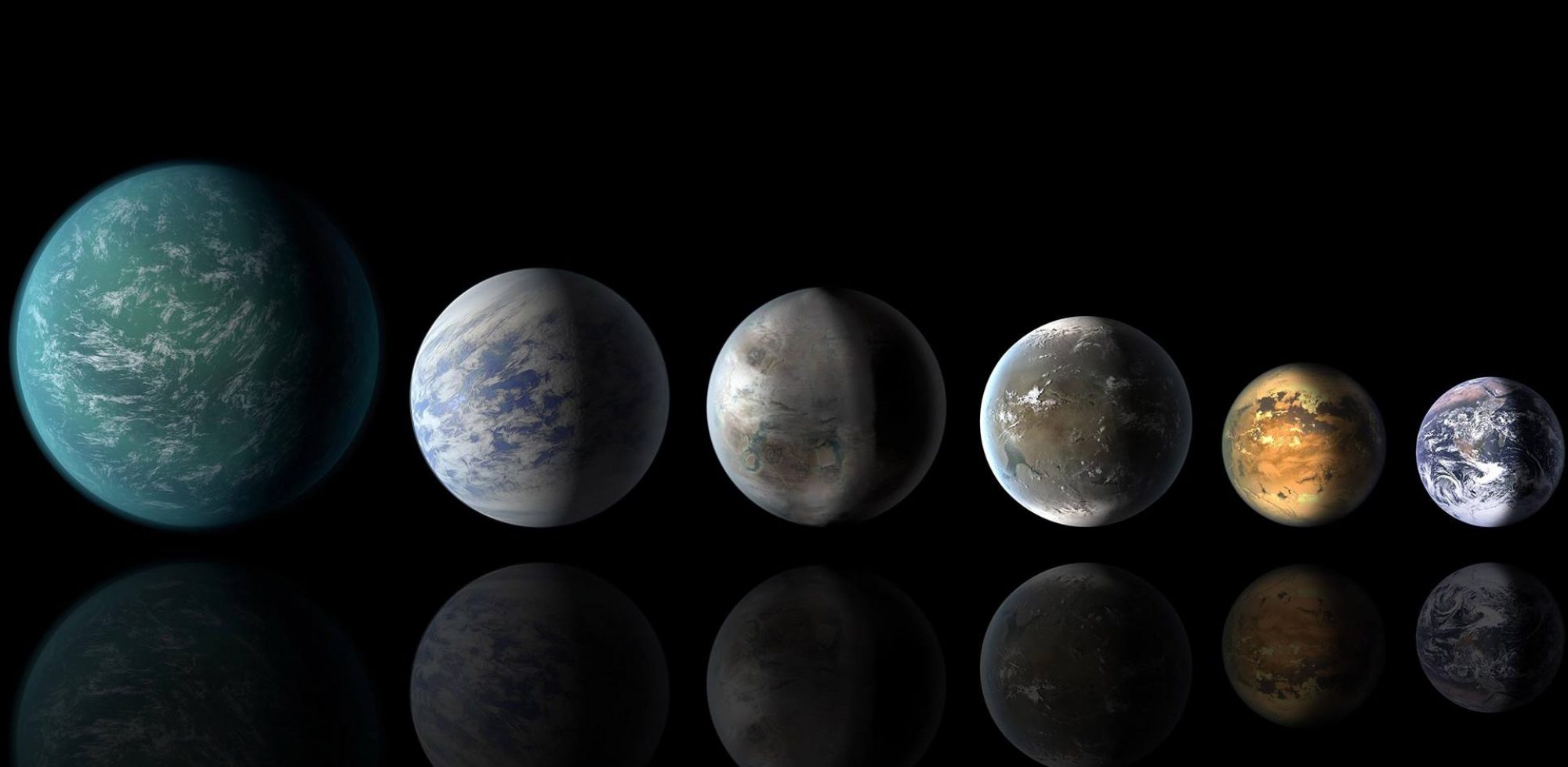
I had the pleasure of reporting and writing the Many Worlds column -- sponsored by NASA's NExSS initiative and the Lunar & Planetary Institute -- for more than seven years, but the run came to an end in October. Now an archive of the more than 400 columns is easily available at http://www.manyworlds.space. The stories …
Pam Conrad: The NASA Astrobiologist Who Also Became a Minister
Science and religion so often seem to be in conflict, with the chasm between them widening all the time. For many, the grounding of their religion is in faith and belief in powers beyond our understanding. For people of science, the grounding is in empirical facts and measurements that can be tested to help explain …
Continue reading "Pam Conrad: The NASA Astrobiologist Who Also Became a Minister"
More On The Very Hot Science of Stellar Flares and Their Implications For Habitability
Among the many scientific fields born, or reborn, by the rise of astrobiology and its search for life beyond Earth is the study of stars, including our own Sun. Now that we know that planets -- from the large and gaseous to the small and rocky -- are common in our galaxy and number in …
“Tantalizing” Carbon Signals From Mars
The rugged and parched expanses of Western Australia are where many of the oldest signs of ancient life on Earth have been found, embedded in the sedimentary rocks that have been undisturbed there for eons. One particularly significant finding from the Tumbiana Formation contained a substantial and telltale excess of the carbon-12 isotope compared with …
A Call To Action on Ensuring That Extraordinary Claims About ET Life Come With Extraordinary Evidence
The global scientific search for signs of life beyond Earth has produced cutting-edge and paradigm-shifting science for several decades now, and it has clearly found eager audiences around the world. This search is a high-priority goal of NASA and other space agencies, as well as institutions, universities and companies. While the successes in this broadly …
Japan’s Hayabusa2 Mission Returns to Earth
Fireball created by the Hayabusa2 re-entry capsule as it passes through the Earth's atmosphere towards the ground (JAXA). In the mission control room in Japan, all eyes were fixed on one of the large screens that ran along the far wall. The display showed the night sky, with stars twinkling in the blackness. We were …
Continue reading "Japan’s Hayabusa2 Mission Returns to Earth"
How Radioactive Elements May Make Planets Suitable or Hostile to Life
When describing exoplanets that are potentially promising candidates for life, scientists often use the terminology of the "habitable zone." This is a description of planets in orbit where temperatures, as predicted by the distance from the host star, are not too cold for liquid water to exist on a planetary surface and also not to …
Continue reading "How Radioactive Elements May Make Planets Suitable or Hostile to Life"
“Agnostic Biosignatures,” And The Path To Life As We Don’t Know It
Biosignatures -- evidence that says or suggests that life has once been present -- are often very hard to find and interpret. Scientists examining fossilized life on Earth can generally reach some sort of agreement about what is before them, but what about the soft-bodied or even single-celled organisms that were the sum total of …
Continue reading "“Agnostic Biosignatures,” And The Path To Life As We Don’t Know It"
NExSS 2.0
The Nexus for Exoplanet System Science, or “NExSS,” began four years ago as a NASA initiative to bring together a wide range of scientists involved generally in the search for life on planets outside our solar system. With teams from seventeen academic and NASA centers, NExSS was founded on the conviction that this search …
First Mapping of Interstellar Clouds in Three Dimensions; a Key Breakthrough for Better Understanding Star Formation
When thinking and talking about "astrobiology," many people are inclined to think of alien creatures that often look rather like us, but with some kind of switcheroo. Life, in this view, means something rather like us that just happens to live on another planet and perhaps uses different techniques to stay alive. But as defined …
 Many Worlds