Primordial Asteroids, And The Stories They Are Telling

  Asteroid, we've long been told, started tiny in our protoplanetary disk and only very gradually became more massive through a process of accretion.  They collected dust from the gas cloud that surrounded our new star, and then grew larger through collisions with other growing asteroids. But in recent years, a new school of thought …

Elegant Image of Icy Disk Around The Young Fomalhaut System

An international team of astronomers using the Atacama Large Millimeter/submillimeter Array (ALMA) has made the first complete millimeter-wavelength image of the ring of dusty debris surrounding the young star Fomalhaut. This well-defined band of rubble and gas is likely the result of comets smashing together near the outer edges of a planetary system 25 light-years from …

NASA Panel Supports Life-Detecting Lander for Europa; Updated

As I prepare for the Astrobiology Science Conference (Abscicon) next week in Arizona, I'm struck by how many speakers will be discussing Europa missions, Europa science, ocean worlds and habitability under ice.  NASA's Europa Clipper mission to orbit that moon, scheduled for launch to the Jupiter system in the mid 2020s, explains part of the …

What Scientists Expect to Learn From Cassini’s Upcoming Plunge Into Saturn

Seldom has the planned end of a NASA mission brought so much expectation and scientific high drama. The Cassini mission to Saturn has already been a huge success, sending back iconic images and breakthrough science of the planet and its system.  Included in the haul have been the discovery of plumes of water vapor spurting …

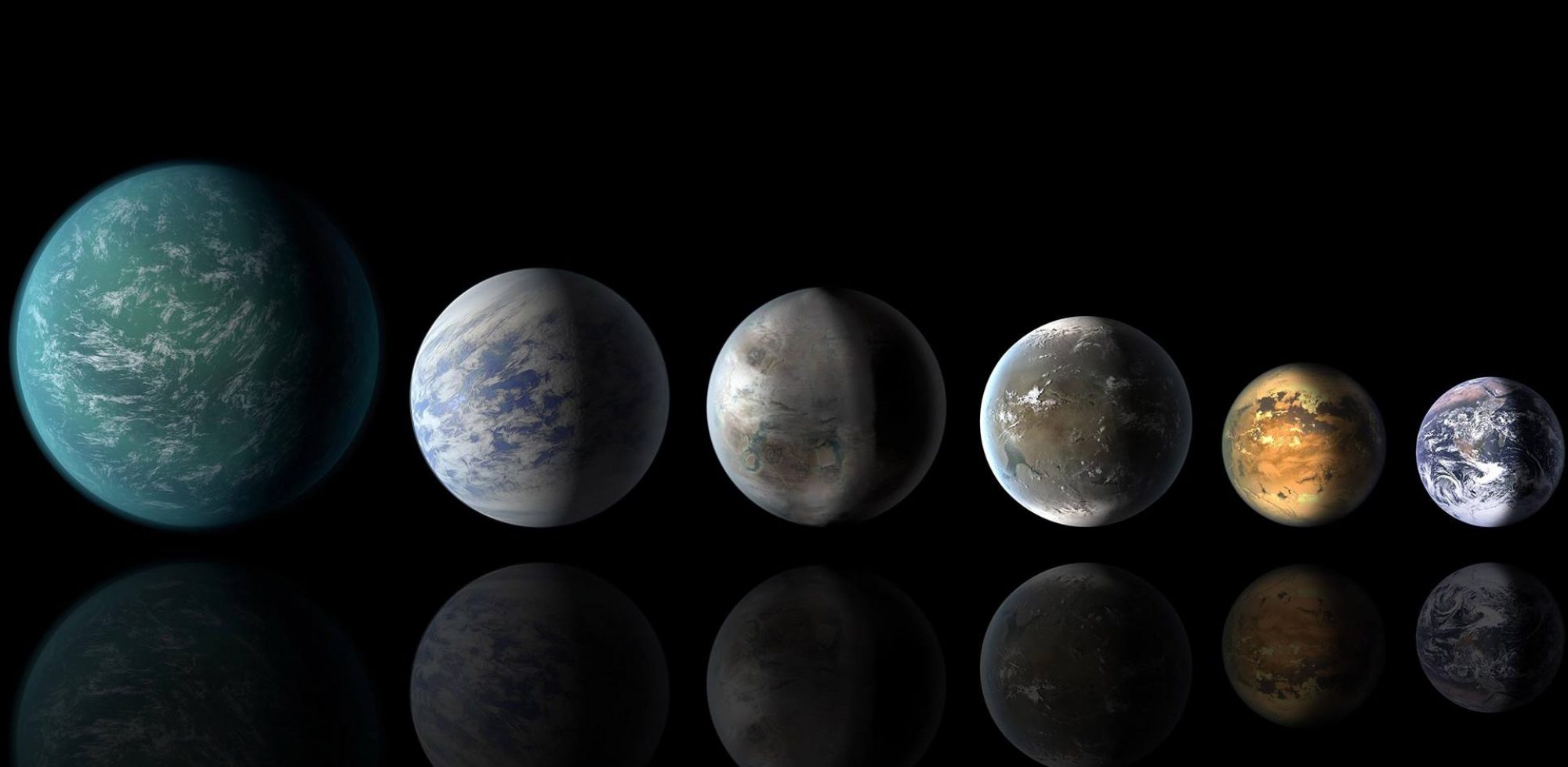
A Solar System Found Crowded With Seven Earth-Sized Exoplanets

Seven planets orbiting one star.  All of them roughly the size of Earth.  A record three in what is considered the habitable zone, the distance from the host star where liquid water could exist on the surface.  The system a mere 40 light-years away. The latest impressive additions to the world of exoplanets orbit the …

Proxima b Is Surely Not "Earth-like." But It’s A Research Magnet And Just May Be Habitable.

It is often discussed within the community of exoplanet scientists that a danger lies in the description of intriguing exoplanets as "Earth-like." Nothing discovered so far warrants the designation, which is pretty nebulous anyway.  Size and the planet's distance from a host star are usually what earn it the title "Earth-like," with its inescapable expectation …