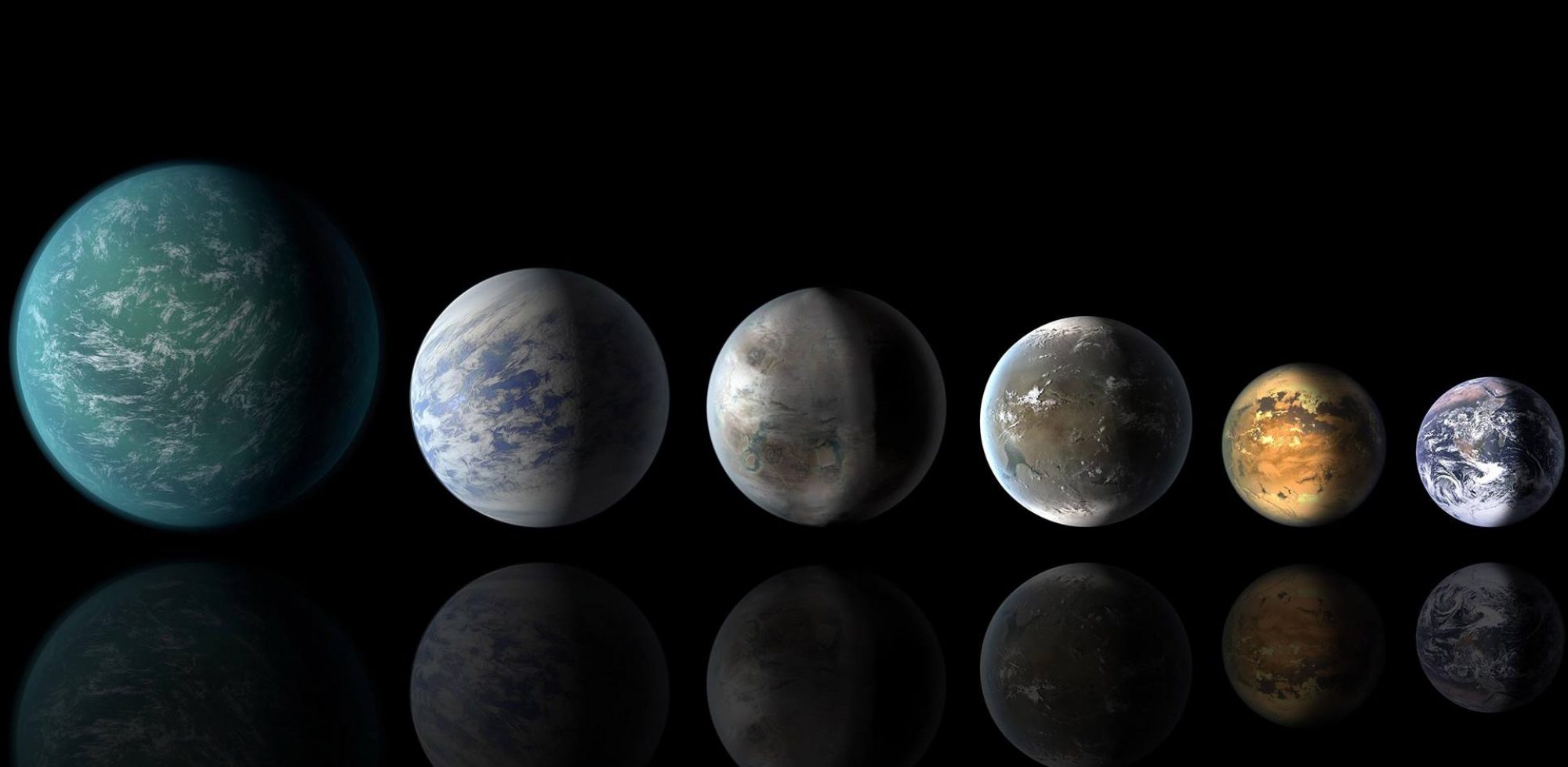
Preparing For The Habitable Worlds Observatory, Our Best Shot at Finding ET Life

In a solar system far, far away, life of some sort is just waiting to be found.  Or so the world of astrobiology sure hopes it is. The new player in the astrobiology world, now called the Habitable Worlds Observatory (HWO), is planned to launch in the 2040s if all goes well.  While it's possible …

The Familiar, Yet So Different, Hydrocarbon Rivers of Titan

There are three planets or moons in our solar system known to now have, or once had, surface rivers, lakes, deltas and a hydrologic system.  There's Earth, of course, Mars long ago when it was warmer and wetter, and the so different yet so similar rivers of hydrocarbons on Saturn's moon, Titan. Understanding the dynamics …

All Six Element Needed For Life as We Know It Have Now Been Found in The Watery Plumes of Enceladus

The elements needed for life as we know it are carbon, hydrogen, oxygen, nitrogen sulfur and phosphorus. Before today, planetary scientists could say that five of those crucial elements had been found in the watery spray that spurts out of the Saturn's moon, Enceladus.  All that was missing was phosphorus. But today research presented in …

Destination: Europa

"ALL THESE WORLDS ARE YOURS – EXCEPT EUROPA. ATTEMPT NO LANDING THERE." These are the words broadcast by the computer HAL as recounted in Arthur C. Clarke's book "2010: Odyssey Two," the sequel to the iconic "2001: A Space Odyssey." The message had been delivered to the computer by the non-corporeal David Bowman (the focus …

Spacecraft Smashes Into A Near-Earth Asteroid in the First Major Test of NASA’s Planetary Defense Program

As a test of our ability to damage a potentially hazardous asteroid heading our way, or perhaps to give it enough of a push that the asteroid's path is changed enough to render it harmless, a NASA spacecraft tonight successfully collided with an asteroid some 6.8 mllion miles away. The Dart spacecraft – short for …

The Virtual Planetary Lab and Its Search for What Makes an Exoplanet Habitable, or Even Inhabited

For more than two decades now, the Virtual Planetary Laboratory (VPL) at the University of Washington in Seattle has been at the forefront of the crucial and ever-challenging effort to model how scientists can determine whether a particular exoplanet is capable of supporting life or perhaps even had life on it already. To do this, …