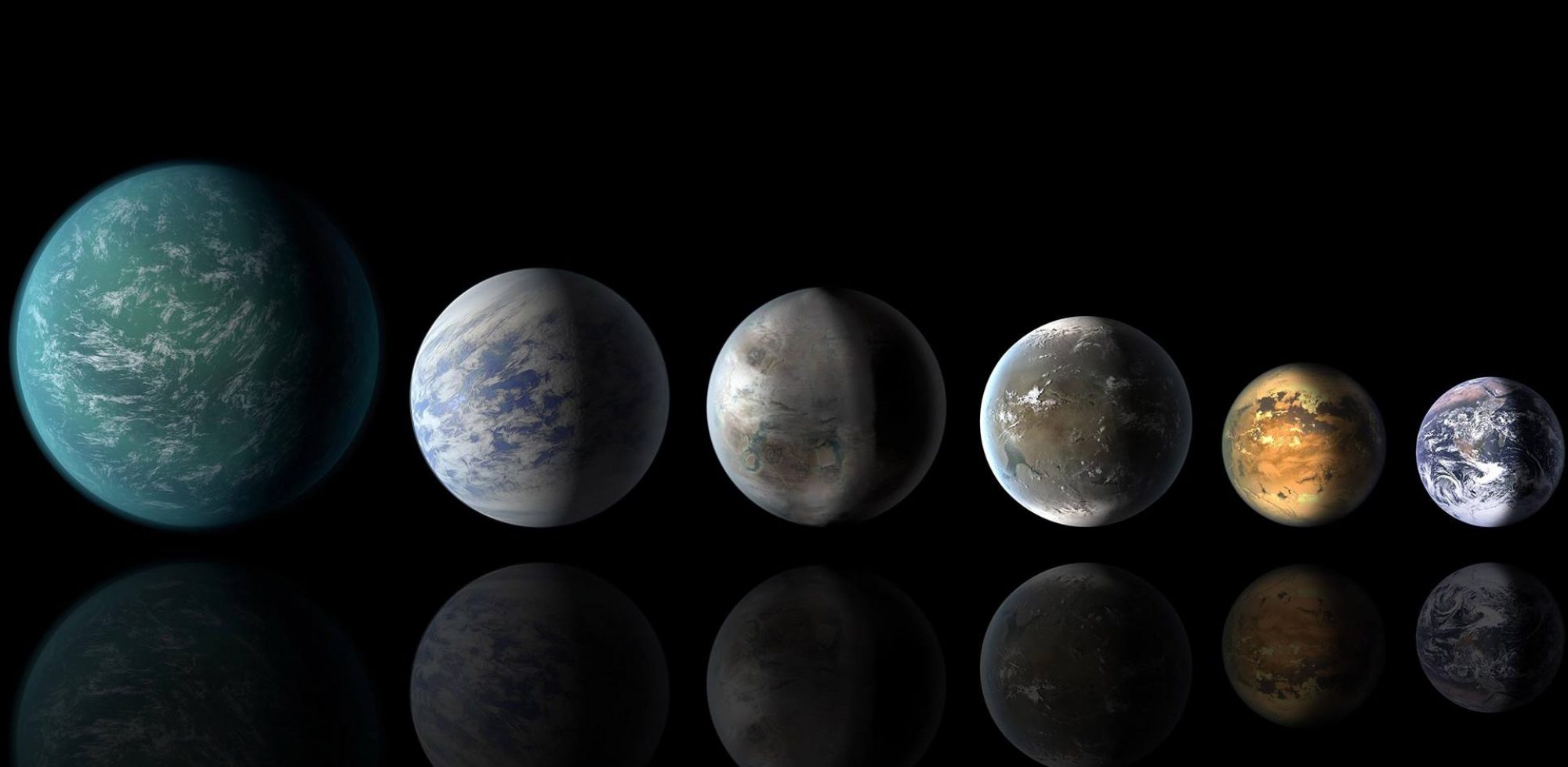
When our sun was young, it was significantly less luminous and sent out significantly less warming energy than it does now. Scientists estimate that 4 million years ago, when the sun and our solar system were 500 million years old, the energy that the sun produced and dispersed was about 75 percent of what it …
Strong Doubts Arise About the Reported Phosphine Biosignature in the Atmosphere of Venus
What started as a stunning announcement that the chemical phosphine -- a known byproduct of life -- had been found in the clouds of Venus and could signal the presence of some lifeform has now been strongly critiqued by a number of groups of scientists. As a result, there is growing doubt that the finding, …
New Discoveries of Water on the Sunlit Side of the Moon. Might the H2O Be Encased in Glass-like Beads?
The search for water on the moon has produced a discovery of tiny molecule-sized perhaps widespread amounts of H20 in a sunlit lunar crater. The water is not in a liquid or ice or gaseous form, but rather apparently contained (and protected) inside glass beads formed when micrometeorites hit the surface. The detection was made …
OSIRIS-REx Scoops The Surface of the Asteroid Bennu!
Surprising Insights Into the Asteroid Bennu’s Past, as OSIRIS-REx Prepares For a Sample-Collecting “Tag”
Long before there was an Earth, asteroids large and small were orbiting our young sun. Among them was one far enough out from the sun to contain water ice, as well as organic compounds with lots of carbon. In its five billion years or so as an object, the asteroid was hit and broken apart …
Why Not Assemble Space Telescopes In Space?
As we grow more ambitious in our desires to see further and more precisely in space, the need for larger and larger telescope mirrors becomes inevitable. Only with collection of significantly more photons by a super large mirror can the the quality of the "seeing" significantly improve. The largest mirror in space now is the …
Continue reading "Why Not Assemble Space Telescopes In Space?"
Cores, Planets and The Mission to Psyche
Deep inside the rocky planets of our solar system, as well as some solar system moons, is an iron-based core. Some, such as Earth's core, have an inner solid phase and outer molten phase, but the solar system cores studied so far are of significantly varied sizes and contain a pretty wide variety of elements …
Our Sun, as Never Seen Before
The first images of the sun from the European Space Agency/NASA’s Solar Orbiter have been released and are stupendous. They are the closest photos ever taken of the star that we orbit, and have already revealed some fascinating features that nobody knew existed. Launched early this year, the spacecraft completed its first close pass of …
Sample Return in the Time of Coronavirus
For space scientists of all stripes, few goals are as crucial as bringing pieces of Mars, of asteroids, of other planets and moons back to Earth for the kind of intensive study only possible here. Space missions can, and have, told us many truths about the solar system, but having a piece of Mars …
For First Time, Tiny CubeSat Locates a Distant Exoplanet
The image above, courtesy of NASA's Jet Propulsion Laboratory, shows the CubeSat ASTERIA as it was being launched from the International Space Station in 2017. The size of a briefcase, ASTERIA is part of a growing armada of tiny spacecraft being launched around the world and adding an increasingly important (and inexpensive) set of …
Continue reading "For First Time, Tiny CubeSat Locates a Distant Exoplanet"
 Many Worlds