Primordial Asteroids, And The Stories They Are Telling

  Asteroid, we've long been told, started tiny in our protoplanetary disk and only very gradually became more massive through a process of accretion.  They collected dust from the gas cloud that surrounded our new star, and then grew larger through collisions with other growing asteroids. But in recent years, a new school of thought …

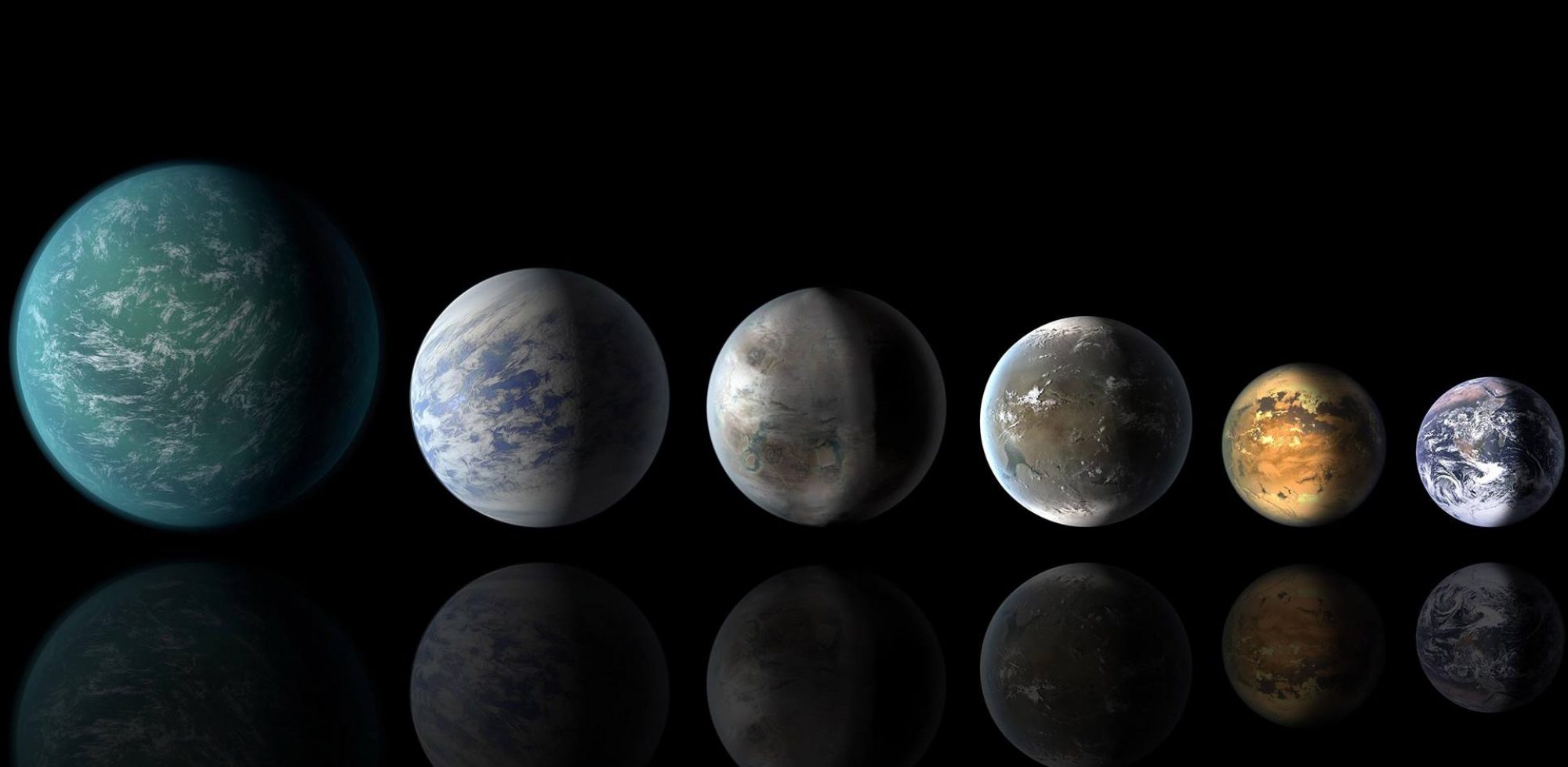
Nobel Laureate Jack Szostak: Exoplanets Gave The Origin of Life Field a Huge Boost

Sometimes tectonic shifts in scientific disciplines occur because of discoveries and advances in the field.  But sometimes they occur for reasons entirely outside the field itself.  Such appears to be case with origins-of-life studies. Nobel laureate Jack Szostak was recently in Tokyo to participate in a workshop at the Earth-Life Science Institute (ELSI) at the …

Ocean Worlds: Enceladus Looks Increasingly Habitable, and Europa’s Ocean Under the Ice More Accessible to Sample

It wasn't that long ago that Enceladus, one of 53 moons of Saturn, was viewed as a kind of ho-hum object of no great importance.  It was clearly frozen and situated in a magnetic field maelstrom caused by the giant planet nearby and those saturnine rings. That view was significantly modified in 2005 when scientists …

What Scientists Expect to Learn From Cassini’s Upcoming Plunge Into Saturn

Seldom has the planned end of a NASA mission brought so much expectation and scientific high drama. The Cassini mission to Saturn has already been a huge success, sending back iconic images and breakthrough science of the planet and its system.  Included in the haul have been the discovery of plumes of water vapor spurting …