In 1950, while working at Los Alamos National Laboratory, renowned physicist Enrico Fermi was lunching with colleagues including Edward Teller, Herbert York an Emil Konopinski. The group talked and laughed about a spate of recent UFO reports during the meal, as well as a cartoon about who might be stealing garbage can tops. Was it …
Curiosity Has Found The Element Boron On Mars. That’s More Important Than You Might Think
For years, noted chemist and synthetic life researcher Steven Benner has talked about the necessary role of the element boron in the origin of life. Without boron, he has found, many of the building blocks needed to form the earliest self-replicating ribonucleic acid (RNA) fall apart when they come into contact with water, which is …
The Stellar Side of The Exoplanet Story
When it comes to the study of exoplanets, it's common knowledge that the host stars don't get much respect. Yes, everyone knows that there wouldn't be exoplanets without stars, and that they serve as the essential background for exoplanet transit observations and as the wobbling object that allows for radial velocity measurements that lead …
Waiting on Enceladus
Of all the possible life-beyond-Earth questions hanging fire, few are quite so intriguing as those surrounding the now famous plumes of the moon Enceladus: what telltale molecules are in the constantly escaping jets of water vapor, and what dynamics inside the moon are pushing them out? Seldom, if ever before, have scientists been given such …
The Ancient Mars Water Story, Updated
Before the Curiosity rover landed on Mars, NASA's "follow the water"maxim had already delivered results that suggested a watery past and just maybe some water not far below the surface today that would periodically break through on sun-facing slopes. While tantalizing -- after all, the potential presence of liquid water on a exoplanet's surface is …
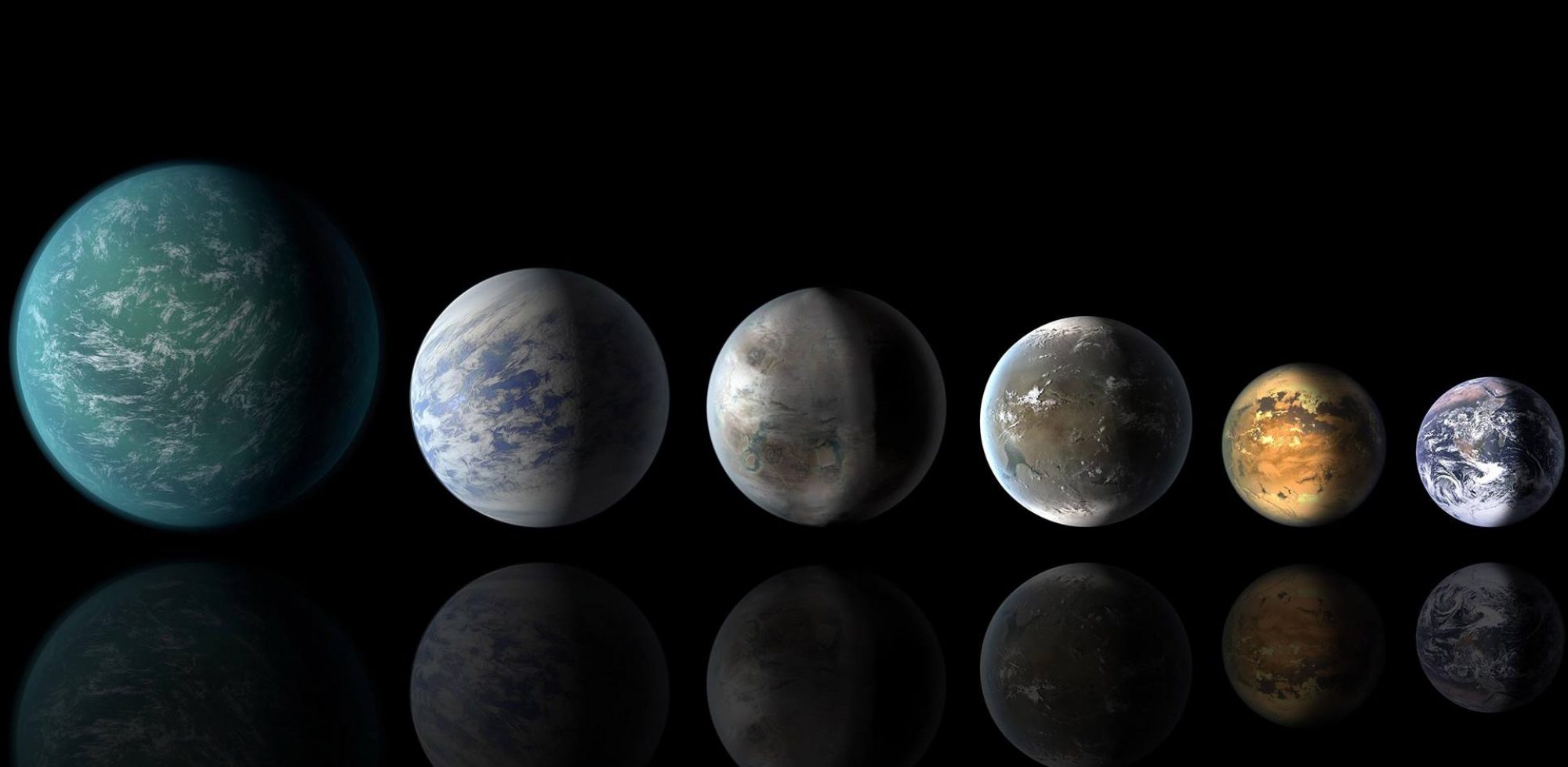
One Planet, But Many Different Earths
We all know that life has not been found so far on any planet beyond Earth -- at least not yet. This lack of discovery of extraterrestrial life has long been used as a knock on the field of astrobiology and has sometimes been put forward as a measure of Earth's uniqueness. But the more …
More Evidence of Water Plumes On Europa Increases Confidence That They’re For Real
Europa is a moon no bigger than our own and is covered by deep layers of ice, but it brings with it a world of promise. Science fiction master and sometimes space visionary Arthur C. Clarke, after all, named it as the most likely spot in our solar system to harbor life, and wrote a …
Proxima b Is Surely Not "Earth-like." But It’s A Research Magnet And Just May Be Habitable.
It is often discussed within the community of exoplanet scientists that a danger lies in the description of intriguing exoplanets as "Earth-like." Nothing discovered so far warrants the designation, which is pretty nebulous anyway. Size and the planet's distance from a host star are usually what earn it the title "Earth-like," with its inescapable expectation …
Found: Our Nearest Exoplanet Neighbor
No exoplanet can possibly be closer to us than the one just detected around our nearest stellar neighbor, Proxima Centauri. The long-sought and long-imagined planet is larger than Earth, but small enough to be rocky as opposed to a gas or ice giant. Making things even more exciting, the planet was detected inside the habitable …
Earth: A Prematurely Inhabited Planet?
The study of the formation and logic of the universe (cosmology) and the study of exoplanets and their conduciveness to life do not seem to intersect much. Scientists in one field focus on the deep physics of the cosmos while the others search for the billions upon billions of planets out there and seek to …
 Many Worlds