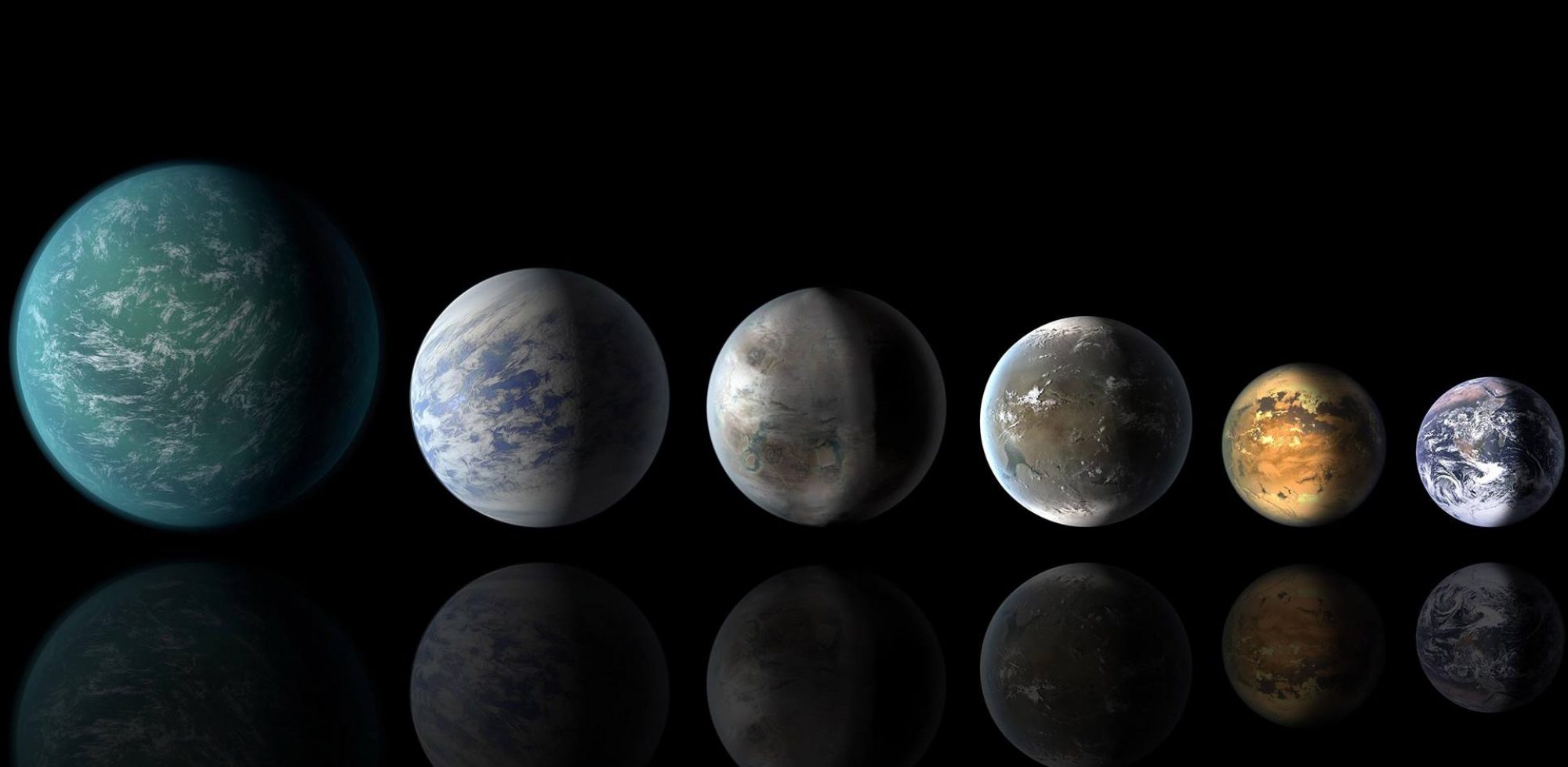
We live in a dangerous universe. We know about meteor and comets, about harmful radiation that could extinguish life without an electromagnetic shield, about major changes in climate that are both natural and man-made. There’s another risk out there that some scientists assert could cause large-scale extinctions even though it would occur scores of light-years …
Where Should We Look for Ancient Biosignatures on Mars in 2020?
One of the great successes of the Curiosity mission to Mars is that the rover landed at what turned out to be a goldmine of a location. The mission has once and for all determined that the planet was habitable at least during its early days, that it contains the organic building blocks of life, …
Continue reading "Where Should We Look for Ancient Biosignatures on Mars in 2020?"
NASA Panel Supports Life-Detecting Lander for Europa; Updated
As I prepare for the Astrobiology Science Conference (Abscicon) next week in Arizona, I'm struck by how many speakers will be discussing Europa missions, Europa science, ocean worlds and habitability under ice. NASA's Europa Clipper mission to orbit that moon, scheduled for launch to the Jupiter system in the mid 2020s, explains part of the …
Continue reading "NASA Panel Supports Life-Detecting Lander for Europa; Updated"
Ocean Worlds: Enceladus Looks Increasingly Habitable, and Europa’s Ocean Under the Ice More Accessible to Sample
It wasn't that long ago that Enceladus, one of 53 moons of Saturn, was viewed as a kind of ho-hum object of no great importance. It was clearly frozen and situated in a magnetic field maelstrom caused by the giant planet nearby and those saturnine rings. That view was significantly modified in 2005 when scientists …
The Magma Ocean and Us
In the late stages of the formation of Earth, the planet was a brutally hot, rough place. But perhaps not precisely in the way you might imagine. Most renderings of that time show red-hot lava flowing around craggy rocks, with meteorites falling and volcanoes erupting. But according to those who study the time, the reality …
A Vision That Could Supercharge NASA
Let your mind wander for a moment and let it land on the most exciting and meaningful NASA mission that you can imagine. An undertaking, perhaps, that would send astronauts into deep space, that would require enormous technological innovation, and that would have ever-lasting science returns. Many will no doubt think of Mars and the …
How to Give Mars an Atmosphere, Maybe
The Many Worlds site has been down for almost two weeks following the crash of the server used to publish it. We never expected it would take quite this long to return to service, but now we are back with a column today and another one for early next week. Earth is most fortunate to …
A Solar System Found Crowded With Seven Earth-Sized Exoplanets
Seven planets orbiting one star. All of them roughly the size of Earth. A record three in what is considered the habitable zone, the distance from the host star where liquid water could exist on the surface. The system a mere 40 light-years away. The latest impressive additions to the world of exoplanets orbit the …
Continue reading "A Solar System Found Crowded With Seven Earth-Sized Exoplanets"
Ceres, Asteroids And Us
For most of us, asteroids exist primarily as a threat. An asteroid that landed around the Yucatan peninsula, after all, is generally considered to have set into motion the changes that resulted in the elimination of the dinosaurs. Other large in-coming asteroids laid waste to swaths of Siberia in 1908, dug the world's largest crater …
NASA Panel Supports Life-Detecting Lander for Europa
It has been four long decades since NASA has sent an officially-designated life detection mission into space. The confused results of the Viking missions to Mars in the mid 1970s were so controversial and contradictory that scientists -- or the agency at least -- concluded that the knowledge needed to convincingly search for extraterrestrial life …
Continue reading "NASA Panel Supports Life-Detecting Lander for Europa"
 Many Worlds