Recent word that the giant mirror of the James Webb Space Telescope is essentially complete is a cause for celebration, a milestone in the long march toward launching what will be the most powerful astronomical instrument ever. NASA Administrator Charlie Bolden made the announcement at the Goddard Space Flight Center, with senior project scientist John …
Jupiter's Stripes Run Deep, But Hopefully Juno's Problems Do Not
Though on holiday, I wanted to share these images and a bit of the Juno at Jupiter news. Because telescopes have never been able to see clearly down through the thick clouds of Jupiters-- the ones that together form the planet's glorious stipes-- it has remained a mystery how deep they may be. Based on …
Continue reading "Jupiter's Stripes Run Deep, But Hopefully Juno's Problems Do Not"
Exoplanet Clouds; Friend and Foe
Understanding the make-up and dynamics of atmospheric clouds is crucial to our interpretations of how weather and climate behave on Earth, and so it should come as no surprise that clouds are similarly essential to learning the nature and behavior of exoplanets. On many exoplanets, thick clouds and related, though different, hazes have been impediments …
The Ancient Mars Water Story, Updated
Before the Curiosity rover landed on Mars, NASA's "follow the water"maxim had already delivered results that suggested a watery past and just maybe some water not far below the surface today that would periodically break through on sun-facing slopes. While tantalizing -- after all, the potential presence of liquid water on a exoplanet's surface is …
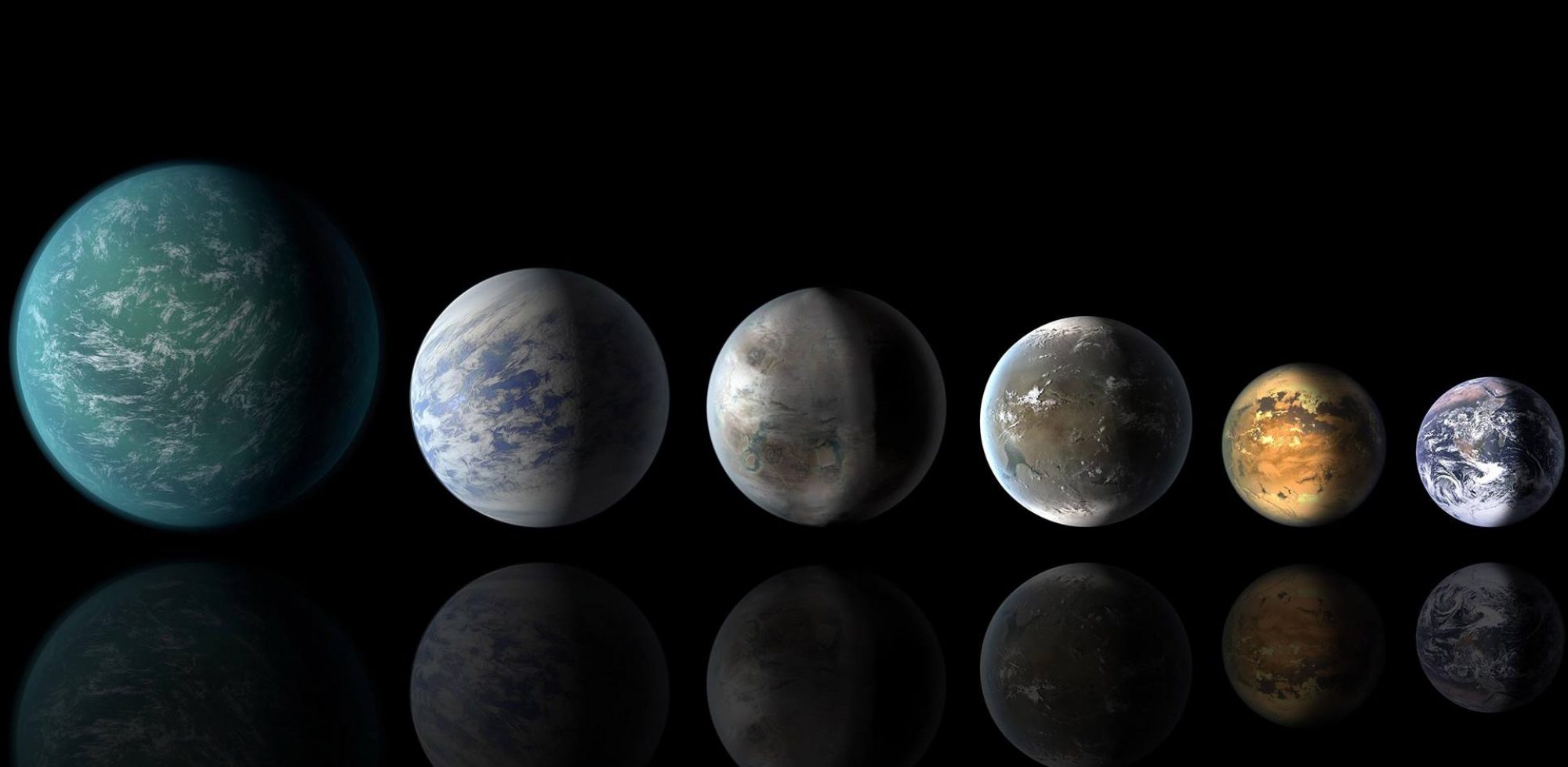
One Planet, But Many Different Earths
We all know that life has not been found so far on any planet beyond Earth -- at least not yet. This lack of discovery of extraterrestrial life has long been used as a knock on the field of astrobiology and has sometimes been put forward as a measure of Earth's uniqueness. But the more …
More Evidence of Water Plumes On Europa Increases Confidence That They're For Real
Europa is a moon no bigger than our own and is covered by deep layers of ice, but it brings with it a world of promise. Science fiction master and sometimes space visionary Arthur C. Clarke, after all, named it as the most likely spot in our solar system to harbor life, and wrote a …
Out Of The Darkness
Before there were planets in our solar system, there was a star that would become our sun. Before there was a sun, there were older stars and exoplanets throughout the galaxies. Before there were galaxies with stars and exoplanets, there were galaxies with stars and no planets. Before there were galaxies without planets, there were …
Proxima b Is Surely Not "Earth-like." But It's A Research Magnet And Just May Be Habitable.
It is often discussed within the community of exoplanet scientists that a danger lies in the description of intriguing exoplanets as "Earth-like." Nothing discovered so far warrants the designation, which is pretty nebulous anyway. Size and the planet's distance from a host star are usually what earn it the title "Earth-like," with its inescapable expectation …
The Case Strengthens For "Planet 9"
The race is on to find the giant planet that several teams of astronomers are convinced orbits far out beyond Pluto, but is nonetheless still part of our solar system. Proving the existence of what has become known as Planet X, or Planet 9, would be a discovery for the textbooks and would inevitably change …
Found: Our Nearest Exoplanet Neighbor
No exoplanet can possibly be closer to us than the one just detected around our nearest stellar neighbor, Proxima Centauri. The long-sought and long-imagined planet is larger than Earth, but small enough to be rocky as opposed to a gas or ice giant. Making things even more exciting, the planet was detected inside the habitable …
 Many Worlds