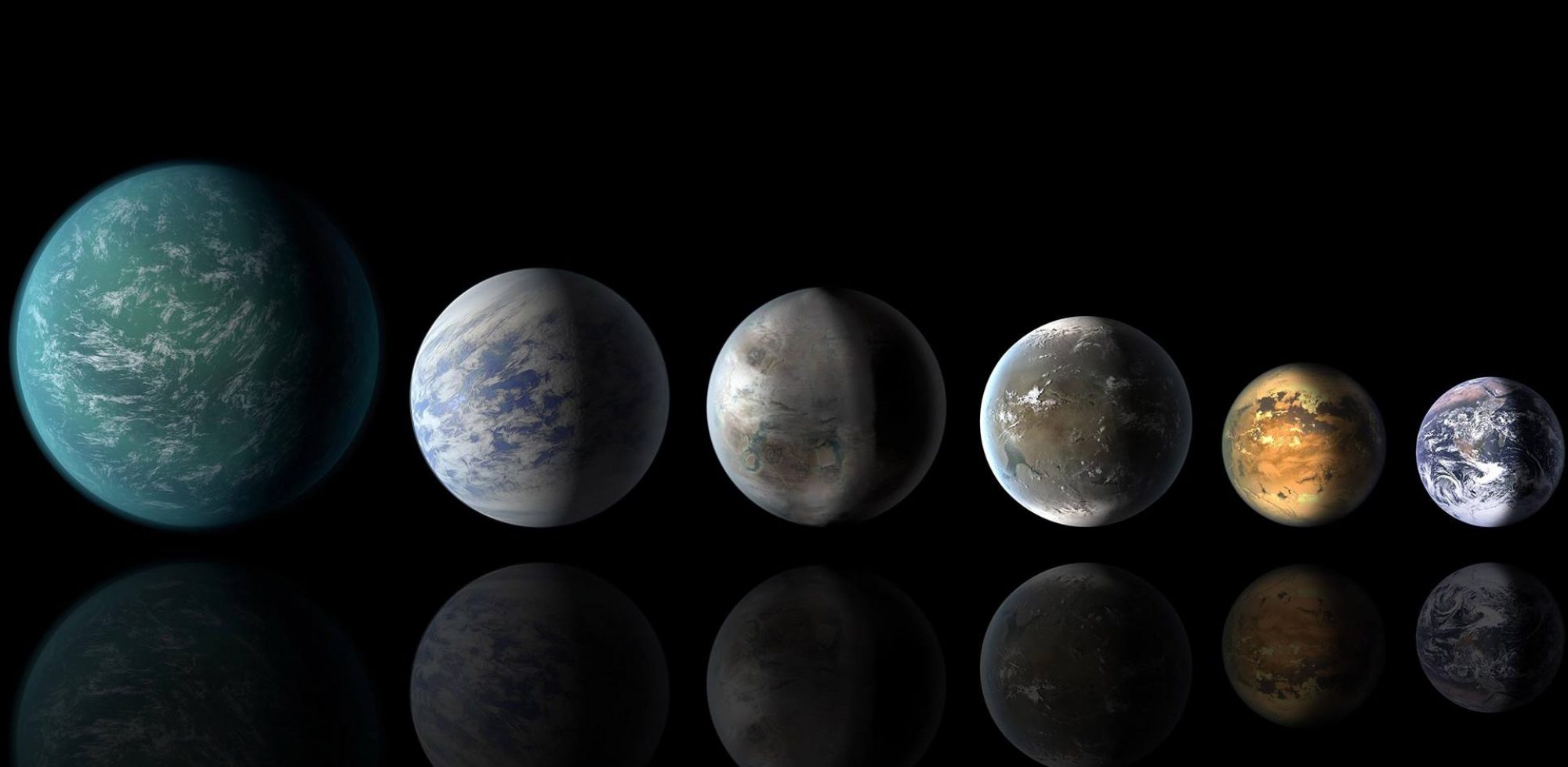
For more than two decades now, the Virtual Planetary Laboratory (VPL) at the University of Washington in Seattle has been at the forefront of the crucial and ever-challenging effort to model how scientists can determine whether a particular exoplanet is capable of supporting life or perhaps even had life on it already. To do this, …
Getting Real About the Oxygen Biosignature
I remember the first time I heard about the atmospheres of distant exoplanets and how could and would let us know whether life was present below. The key was oxygen or its light-modified form, ozone. Because both oxygen and ozone molecules bond so quickly with other molecules -- think rust or iron oxide on …
Continue reading "Getting Real About the Oxygen Biosignature"
Getting Real About the Oxygen Biosignature
I remember the first time I heard about the atmospheres of distant exoplanets and how could and would let us know whether life was present below. The key was oxygen or its light-modified form, ozone. Because both oxygen and ozone molecules bond so quickly with other molecules -- think rust or iron oxide on Mars, …
Continue reading "Getting Real About the Oxygen Biosignature"
Proxima b Is Surely Not "Earth-like." But It’s A Research Magnet And Just May Be Habitable.
It is often discussed within the community of exoplanet scientists that a danger lies in the description of intriguing exoplanets as "Earth-like." Nothing discovered so far warrants the designation, which is pretty nebulous anyway. Size and the planet's distance from a host star are usually what earn it the title "Earth-like," with its inescapable expectation …
Proxima b Is Surely Not "Earth-like." But It's A Research Magnet And Just May Be Habitable.
It is often discussed within the community of exoplanet scientists that a danger lies in the description of intriguing exoplanets as "Earth-like." Nothing discovered so far warrants the designation, which is pretty nebulous anyway. Size and the planet's distance from a host star are usually what earn it the title "Earth-like," with its inescapable expectation …
Ranking Exoplanet Habitability
Now that we know that there are billions and billions of planets beyond our solar system, and we even know where thousands of confirmed and candidate planets are located, where should we be looking for those planets that could in theory support extraterrestrial life, and might just possibly support it now? The first order …
Ranking Exoplanet Habitability
Now that we know that there are billions and billions of planets beyond our solar system, and we even know where thousands of confirmed and candidate planets are located, where should we be looking for those planets that could in theory support extraterrestrial life, and might just possibly support it now? The first order …
 Many Worlds