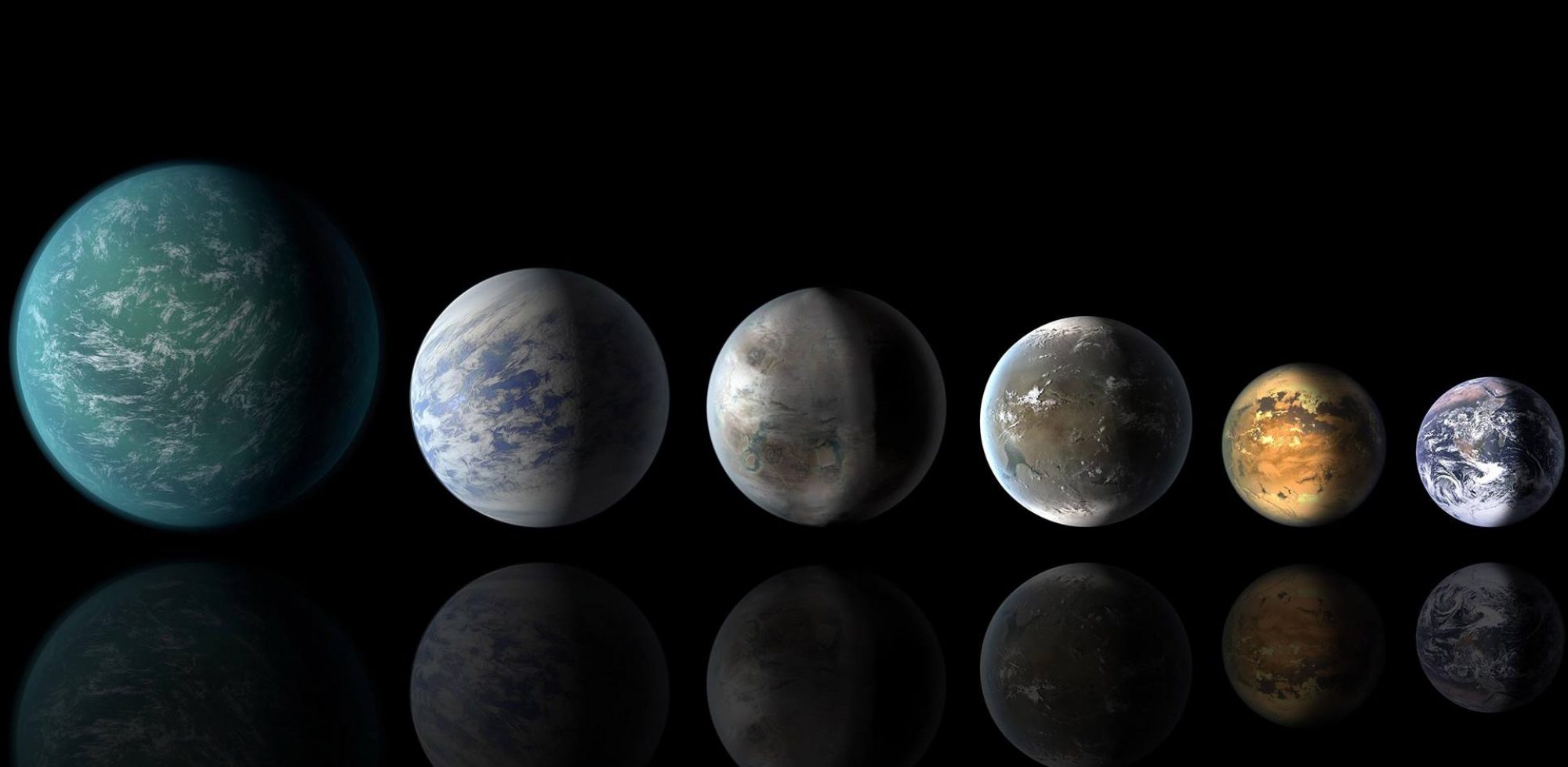
From an Earthcentric point of view, rain of course means falling water. We can have storms with falling dust -- I experienced a few of those while a reporter in India -- but rain is pretty much exclusively H2O falling from the clouds. But as the study of exoplanets moves aggressively into the realm …
On Super-Earths, Sub-Neptunes and Some Lessons They Teach
Part 2 of 2 With such a large proportion of identified exoplanets in the super-Earth to sub-Neptune class, an inescapable question arises: how conducive might they be to the origin and maintenance of life? So little is actually know about the characteristics of these planets that are larger than Earth but smaller than Neptune …
Continue reading "On Super-Earths, Sub-Neptunes and Some Lessons They Teach"
The Exoplanet Era
Throughout the history of science, moments periodically arrive when new fields of knowledge and discovery just explode. Cosmology was a kind of dream world until Edwin Hubble established that the universe was expanding, and doing so at an ever-faster rate. A far more vibrant and scientific discipline was born. On a more practical level, it …
 Many Worlds