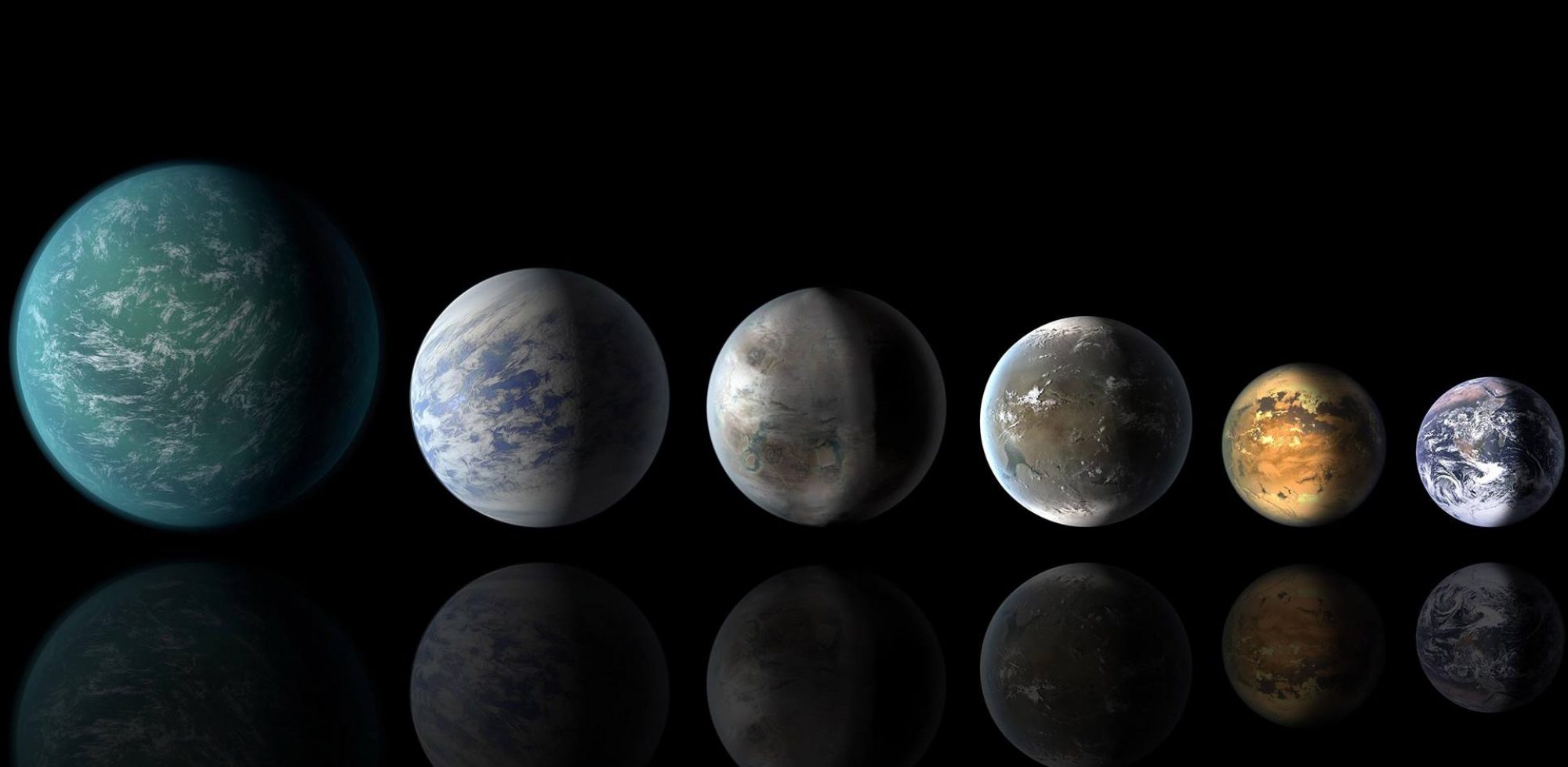
Red dwarf suns are the most common in the universe, and many of the exoplanets officially discovered so far orbit this type of "cool" star. Red dwarfs are much smaller and less powerful than the G type stars such as our own sun, and it is easier to detect exoplanets orbiting them because of their …
The Many Ways The James Webb Space Telescope Could Fail
When a damaged Apollo 13 and its crew were careening to Earth, mission control director Gene Kranz famously told the assembled NASA team that "failure is not an option." Actually, the actor playing Kranz in the "Apollo 13" movie spoke those words, but by all accounts Kranz and his team lived that phrase, with a …
Continue reading "The Many Ways The James Webb Space Telescope Could Fail"
A Young Planet Found That May Well Be Making Moons
Astronomers have many theories about how planets are formed within the gas, dust, pebbles and gradually rocks of the circumstellar disks that encircle a star after it has been born. While the general outlines of this remarkable process are pretty well established, many questions large and small remain unanswered. One is how and when exomoons …
Continue reading "A Young Planet Found That May Well Be Making Moons"
Earth as a Transiting Exoplanet
Exoplanet scientists and enthusiasts spend a lot of time trying to find, measure and understand distant planets that can -- under specific conditions -- be detected as passing in front of their host star. A majority of the 4000-plus exoplanets discovered so far were indirectly detected this way, by measuring the diminishing of stellar light …
The Surface of Venus Was Thought to Be Stagnant. But This May Not Be True
An oblique radar view of the largest "pack ice" block in the Venus lowlands identified by Byrne et al. (Paul Byrne, based on original NASA/JPL imagery). The two Earth-sized planets in our solar system have taken wildly different evolutionary routes. The surface of the Earth became a temperate utopia for a liquid water and a …
Continue reading "The Surface of Venus Was Thought to Be Stagnant. But This May Not Be True"
Will The Habitable Exoplanet Observatory (HabEx) — Or Something Like It — Emerge As NASA’s Next Great Observatory?
Some time later this summer, it is predicted, the National Academy of Sciences will release its long-awaited Decadal Survey for astrophysics, which is expected to recommend the science and architecture that NASA should embrace for its next "Great Observatory." Many Worlds earlier featured one of the four concepts in the running -- LUVOIR or the …
UFOs, Redux
A U.S. government report found that there was no evidence to conclude that the more than 140 unidentified flying object sightings in recent years involved extraterrestrial beings. The government was unable to determine whether the flying mysteries were atmospheric events distorting readings from sensors, confusions in judging objects in motion, spacecraft from other potential hostile …
And Then There Were Three: ESA Follows NASA in Selecting a Mission to Venus
Artist illustration of the EnVision orbiter at Venus (ESA/VR2Planets/DamiaBouic) It was quite a week for Venus scientists. Just seven days after NASA announced the selection of two Venus missions, DAVINCI+ and VERITAS, the European Space Agency (ESA) revealed that a third Venus mission had been chosen for the agency’s medium-class mission category. (See last week’s …
Continue reading "And Then There Were Three: ESA Follows NASA in Selecting a Mission to Venus"
Return to Hell: NASA Selects Two Missions to Venus to Explore the Pathway to Habitability
Artists’ renderings show the VERITAS spacecraft (left) and DAVINCI+ probe (right) as they arrive at Venus (Lockheed Martin). For NASA scientists, Venus missions must feel like buses. You wait thirty years for one, and then two come along at once. Last week, NASA selected two Venus missions for the space agency’s Discovery Program; solar system …
Sure UFOs Exist. But There’s No Reason To Conclude That Aliens Are Flying Them
It seems to happen with some regularity. Claims that Unidentified Flying Objects are visiting us have captured the public imagination once more and a big reveal is expected soon. That will come, oddly, from a government report required to be released by the end of June that will supposedly detail the many sightings made by …
Continue reading "Sure UFOs Exist. But There’s No Reason To Conclude That Aliens Are Flying Them"
 Many Worlds