https://youtu.be/lcJLZfPiyfc An annotated 360-degree view from the Curiosity mast camera. Dust remaining from an enormous recent storm can be seen on the platform and in the sky. And holes in the tires speak of the rough terrain Curiosity has traveled, but now avoids whenever possible. Make the screen bigger for best results and enjoy the …
A National Strategy for Finding and Understanding Exoplanets (and Possibly Extraterrestrial Life)
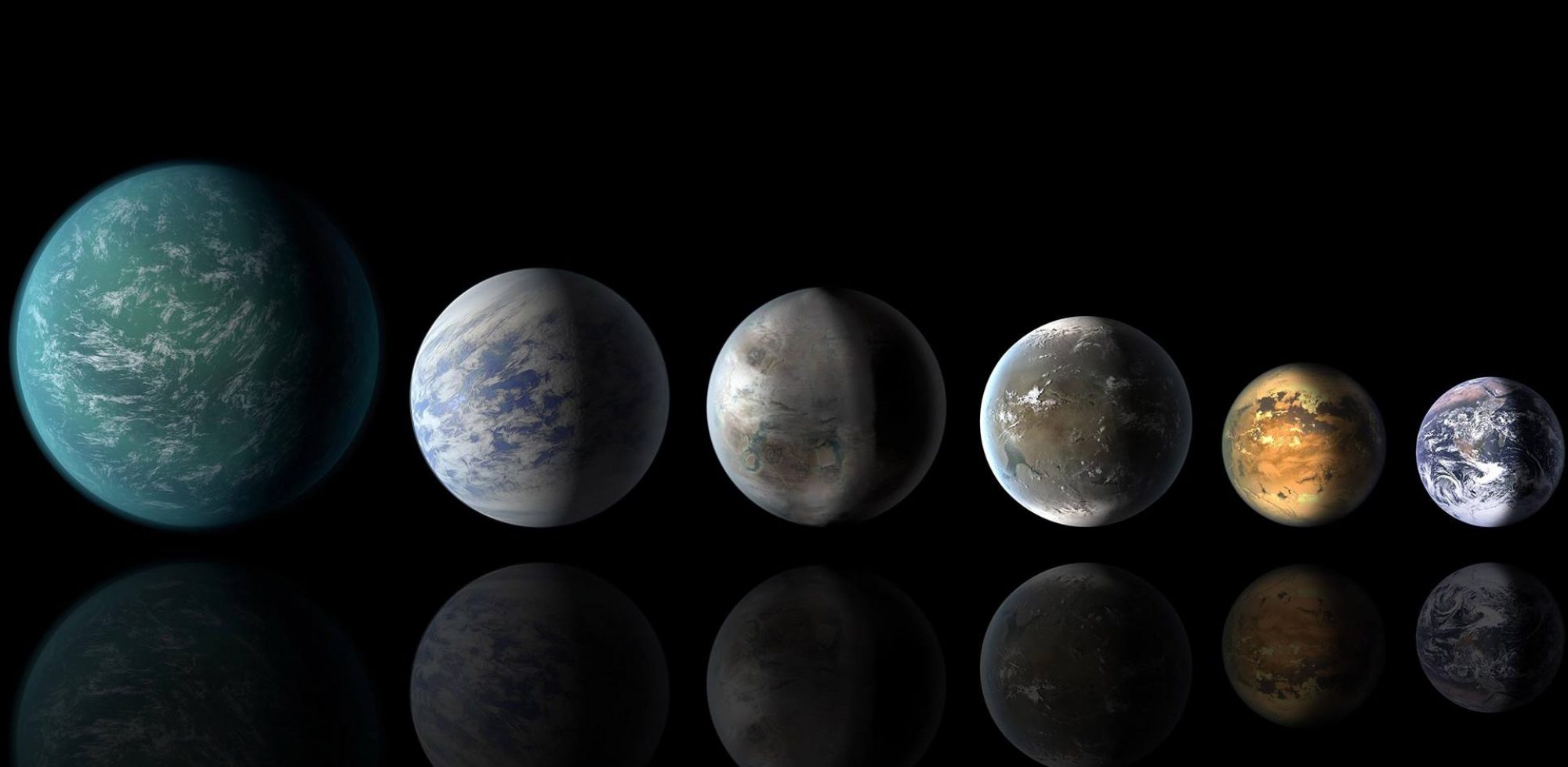
An extensive, congressionally-directed study of what NASA needs to effectively learn how exoplanets form and whether some may support life was released today, and it calls for major investments in next-generation space and ground telescopes. It also calls for the adoption of an increasingly multidisciplinary approach for addressing the innumerable questions that remain unanswered. …
15,000 Galaxies in One Image
Here's an image to fire your imagination: Fifteen thousand galaxies in one picture -- sources of light detectable today that were generated as much as 11 billion years ago. Of those 15,000 galaxies, some 12,000 are inferred to be in the process of forming stars. That's hardly surprising because the period around 11 billions years …
Piecing Together The Narrative of Evolution
An essential characteristic of life is that it evolves. Whether on Earth or potentially Mars, Europa or distant exoplanets, we can assume that whatever life might be present has the capacity and the need to change. Evolution is intimately tied to the origin-of-life question, which this column often explores. Having more answers regarding how life …
Continue reading "Piecing Together The Narrative of Evolution"
Large Reservoir of Liquid Water Found Deep Below the Surface of Mars
Far beneath the frigid surface of the South Pole of Mars is probably the last place where you might expect the first large body of Martian liquid water would be found. It's -170 F on the surface, there are no known geothermal sources that could warm the subterranean ice to make a meltwater lake, and …
Continue reading "Large Reservoir of Liquid Water Found Deep Below the Surface of Mars"
A New Frontier for Exoplanet Hunting
The first exoplanets were all found using the radial velocity method of measuring the "wobble" of a star -- movement caused by the gravitational pull of an orbiting planet. Radial velocity has been great for detecting large exoplanets relatively close to our solar system, for assessing their mass and for finding out how long …
The Architecture of Solar Systems
Before the discovery of the first exoplanet that orbits a star like ours, 51 Pegasi b, the assumption of solar system scientists was that others planetary systems that might exist were likely to be like ours. Small rocky planets in the inner solar system, big gas giants like Jupiter, Saturn and Neptune beyond and, back …
Exoplanet Science Flying High
Early this spring, the organizers of an exoplanet science gathering at Cambridge University put out the word that they would host a major meeting this summer. Within a week, the 300 allotted slots had been filled by scientists aspiring and veteran, and within a short time the waiting list was up to 150 more. …
Asteroid Remains Around Dead Stars Reveal the Likely Fate of Our Solar System
June 30th has been designated “Asteroid Day” to promote awareness of these small members of our solar system. But while asteroids are often discussed in the context of the risk they might pose to the Earth, their chewed up remains around other stars may also reveal the fate of our solar system. It is 6.5 …
Continue reading "Asteroid Remains Around Dead Stars Reveal the Likely Fate of Our Solar System"
Back to the Future on the Moon
What does NASA's drive to return to the moon have to do with worlds of exoplanets and astrobiology that are generally discussed here? The answer is actually quite a lot. Not so much about the science, although current NASA plans would certainly make possible some very interesting science regarding humans living in deep space, as …
 Many Worlds