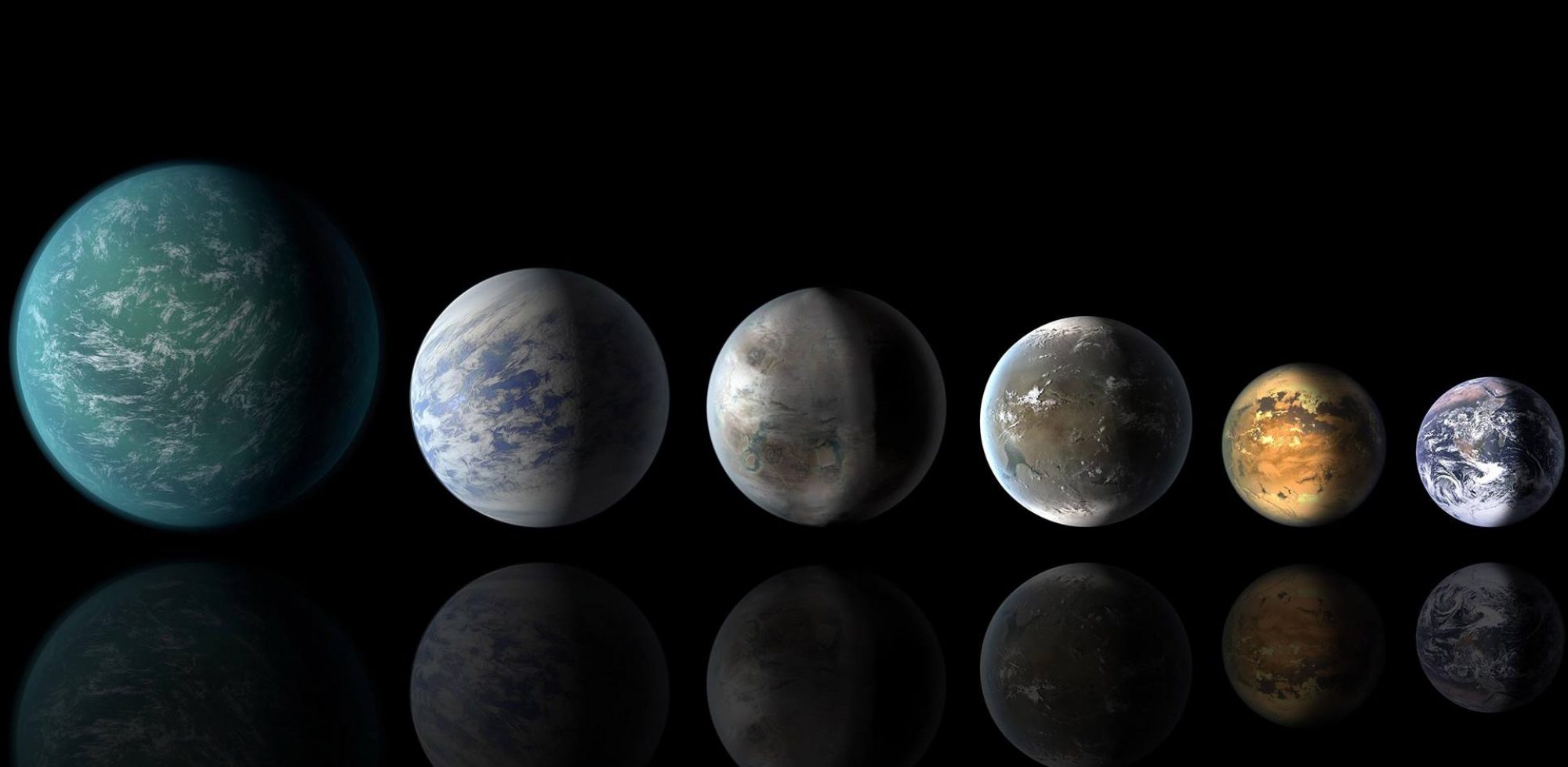
The very first planet detected outside our solar system powerfully made clear that our prior understanding of what planets and solar systems could be like was sorely mistaken. 51 Pegasi was a Jupiter-like massive gas planet, but it was burning hot rather than freezing cold because it orbited close to its host star -- circling …
Does Proxima Centauri Create an Environment Too Horrifying for Life?
In 2016, the La Silla Observatory in Chile spotted evidence of possibly the most eagerly anticipated exoplanet in the Galaxy. It was a world orbiting the nearest star to the sun, Proxima Centauri, making this our closest possible exoplanet neighbour. Moreover, the planet might even be rocky and temperate. Proxima Centauri b had been …
Continue reading "Does Proxima Centauri Create an Environment Too Horrifying for Life?"
Barnard’s Star, The "Great White Whale" of Planet Hunting, Has Surrendered Its Secret
Astronomers have found that Barnard's star -- a very close, fast-moving, and long studied red dwarf -- has a super-Earth sized planet orbiting just beyond its habitable zone. The discovery relied on data collected over many years using the tried-and-true radial velocity method, which searches for wobbles in the movement of the host star. …
The Kepler Space Telescope Mission Is Ending But Its Legacy Will Keep Growing.
The Kepler Space Telescope is dead. Long live the Kepler. NASA officials announced on Tuesday that the pioneering exoplanet survey telescope -- which had led to the identification of almost 2,700 exoplanets -- had finally reached its end, having essentially run out of fuel. This is after nine years of observing, after a malfunctioning …
Continue reading "The Kepler Space Telescope Mission Is Ending But Its Legacy Will Keep Growing."
Technosignatures and the Search for Extraterrestrial Intelligence
The word "SETI" pretty much brings to mind the search for radio signals come from distant planets, the movie "Contact," Jill Tarter, Frank Drake and perhaps the SETI Institute, where the effort lives and breathes. But there was a time when SETI -- the Search for Extraterrestrial Intelligence -- was a significantly broader concept, that …
Continue reading "Technosignatures and the Search for Extraterrestrial Intelligence"
Water Worlds, Aquaplanets and Habitability
The more exoplanet scientists learn about the billions and billions of celestial bodies out there, the more the question of unusual planets -- those with characteristics quite different from those in our solar system -- has come into play. Hot Jupiters, super-Earths, planets orbiting much smaller red dwarf stars -- they are all grist …
Continue reading "Water Worlds, Aquaplanets and Habitability"
A National Strategy for Finding and Understanding Exoplanets (and Possibly Extraterrestrial Life)
An extensive, congressionally-directed study of what NASA needs to effectively learn how exoplanets form and whether some may support life was released today, and it calls for major investments in next-generation space and ground telescopes. It also calls for the adoption of an increasingly multidisciplinary approach for addressing the innumerable questions that remain unanswered. …
15,000 Galaxies in One Image
Here's an image to fire your imagination: Fifteen thousand galaxies in one picture -- sources of light detectable today that were generated as much as 11 billion years ago. Of those 15,000 galaxies, some 12,000 are inferred to be in the process of forming stars. That's hardly surprising because the period around 11 billions years …
A New Frontier for Exoplanet Hunting
The first exoplanets were all found using the radial velocity method of measuring the "wobble" of a star -- movement caused by the gravitational pull of an orbiting planet. Radial velocity has been great for detecting large exoplanets relatively close to our solar system, for assessing their mass and for finding out how long …
The Architecture of Solar Systems
Before the discovery of the first exoplanet that orbits a star like ours, 51 Pegasi b, the assumption of solar system scientists was that others planetary systems that might exist were likely to be like ours. Small rocky planets in the inner solar system, big gas giants like Jupiter, Saturn and Neptune beyond and, back …
 Many Worlds