It wasn't that long ago that Enceladus, one of 53 moons of Saturn, was viewed as a kind of ho-hum object of no great importance. It was clearly frozen and situated in a magnetic field maelstrom caused by the giant planet nearby and those saturnine rings. That view was significantly modified in 2005 when scientists …
A Vision That Could Supercharge NASA
Let your mind wander for a moment and let it land on the most exciting and meaningful NASA mission that you can imagine. An undertaking, perhaps, that would send astronauts into deep space, that would require enormous technological innovation, and that would have ever-lasting science returns. Many will no doubt think of Mars and the …
A Solar System Found Crowded With Seven Earth-Sized Exoplanets
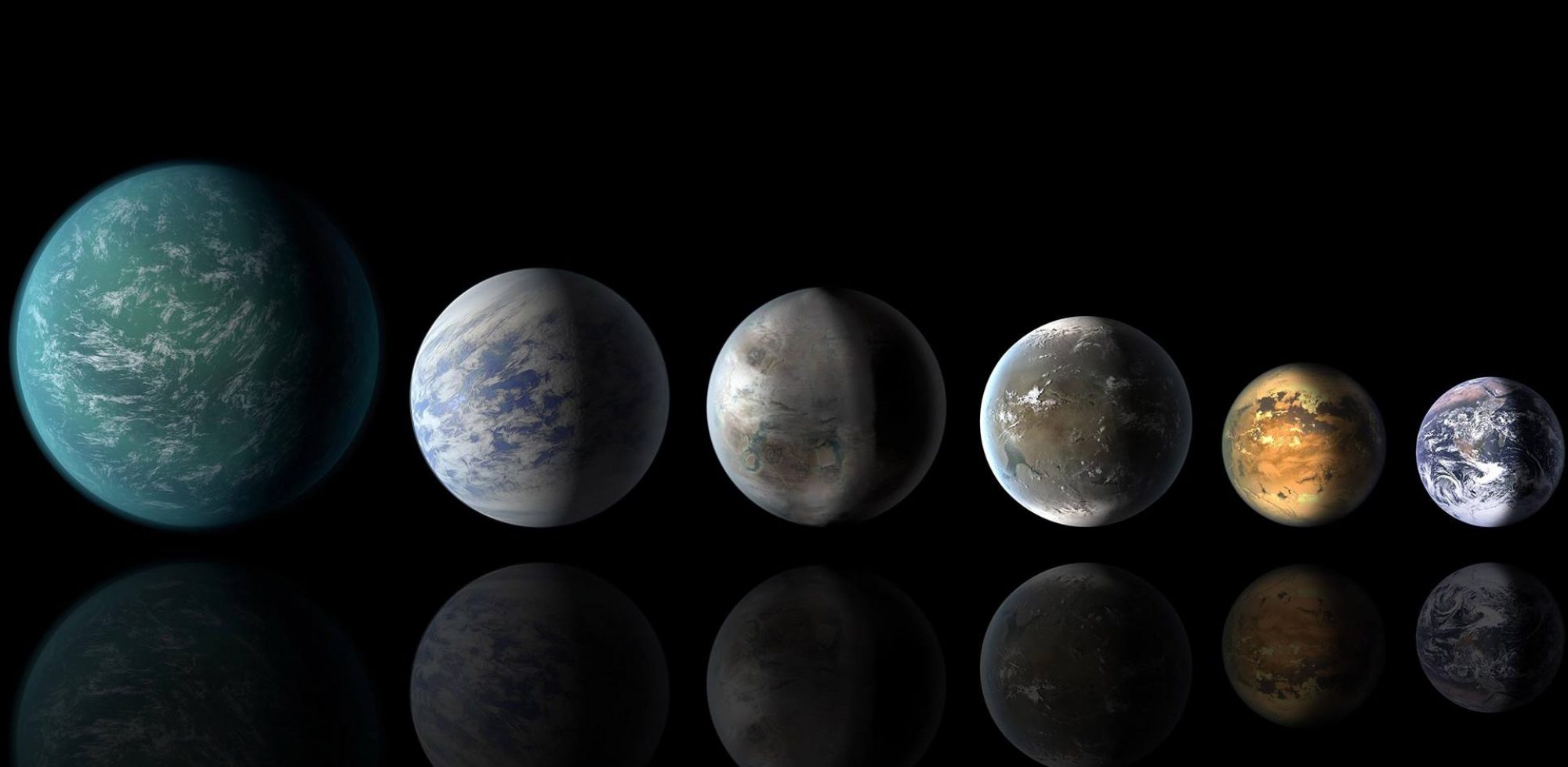
Seven planets orbiting one star. All of them roughly the size of Earth. A record three in what is considered the habitable zone, the distance from the host star where liquid water could exist on the surface. The system a mere 40 light-years away. The latest impressive additions to the world of exoplanets orbit the …
Continue reading "A Solar System Found Crowded With Seven Earth-Sized Exoplanets"
Ceres, Asteroids And Us
For most of us, asteroids exist primarily as a threat. An asteroid that landed around the Yucatan peninsula, after all, is generally considered to have set into motion the changes that resulted in the elimination of the dinosaurs. Other large in-coming asteroids laid waste to swaths of Siberia in 1908, dug the world's largest crater …
NASA Panel Supports Life-Detecting Lander for Europa
It has been four long decades since NASA has sent an officially-designated life detection mission into space. The confused results of the Viking missions to Mars in the mid 1970s were so controversial and contradictory that scientists -- or the agency at least -- concluded that the knowledge needed to convincingly search for extraterrestrial life …
Continue reading "NASA Panel Supports Life-Detecting Lander for Europa"
Waiting on Enceladus
Of all the possible life-beyond-Earth questions hanging fire, few are quite so intriguing as those surrounding the now famous plumes of the moon Enceladus: what telltale molecules are in the constantly escaping jets of water vapor, and what dynamics inside the moon are pushing them out? Seldom, if ever before, have scientists been given such …
Found: Our Nearest Exoplanet Neighbor
No exoplanet can possibly be closer to us than the one just detected around our nearest stellar neighbor, Proxima Centauri. The long-sought and long-imagined planet is larger than Earth, but small enough to be rocky as opposed to a gas or ice giant. Making things even more exciting, the planet was detected inside the habitable …
The Ever More Puzzling, And Intriguing, "Tabby’s Star."
Substantial, sun-like stars are not supposed to dim. They start with gravity and pressure induced nuclear reactions, and then they burn brighter and brighter until they either explode (go supernova) or burn all their fuel and become small, enormously dense, and not very bright "white dwarfs." Of course, the transit technique of searching for exoplanets …
Continue reading "The Ever More Puzzling, And Intriguing, "Tabby’s Star.""
Coming to Terms With Biosignatures
The search for life beyond our solar system has focused largely on the detection of an ever-increasing number of exoplanets, determinations of whether the planets are in a habitable zone, and what the atmospheres of those planets might look like. It is a sign of how far the field has progressed that scientists are now …
Rocky, Close and Potentially Habitable Planets Around a Dwarf Star
Forty light-years away is no small distance. But an announcement of the discovery of two planets at that separation that have been determined to be rocky and Earth-sized adds a significant new twist to the ever-growing collection of relatively close-by exoplanets that just might be habitable. The two planets in the TRAPPIST-1 system orbit what …
Continue reading "Rocky, Close and Potentially Habitable Planets Around a Dwarf Star"
 Many Worlds