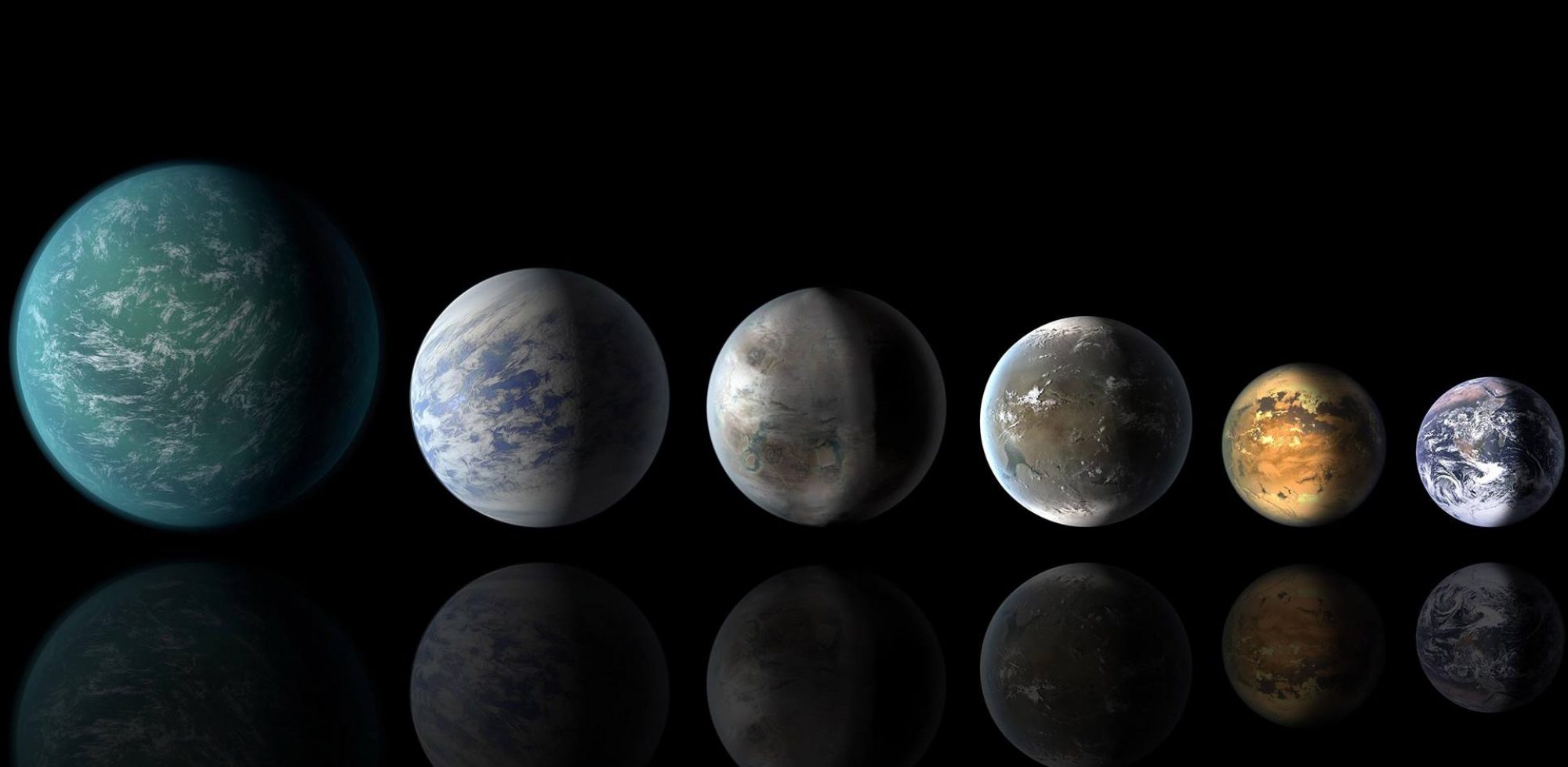
The Habitable Zone Gets Poked, Tweaked and Stretched to the Limits

For more than 20 years now -- even before the first detection of an extra-solar planet -- scientists have posited, defined and then debated the existence and nature of a habitable zone.  It's without a doubt a central scientific concept, and  the idea has caught on with the public (and the media) too.  The discovery …

Shredding Exoplanets, And The Mysteries They May Unravel

One of the seemingly quixotic goals of exoplanet scientists is to understand the chemical and geo-chemical compositions of the interiors of the distant planets they are finding.   Learning whether a planet is largely made up of silicon or magnesium or iron-based compounds is essential to some day determining how and where specific exoplanets were …

The IAU on ExoNames

  The IAU, in the person of Executive Committee member and former General Secretary Thierry Montmerle, wrote the following response to an earlier column, "(Mostly) Thumbs Down on ExoNames."  The response to the article was first posted as a comment on the Many Worlds site, but to ensure that it is seen by readers I …

How Will We Know What Exoplanets Look Like, and When?

An earlier version of this article was accidently published last week before it was completed.  This is the finished version, with information from this week's AAS annual conference. Let's face it:  the field of exoplanets has a significant deficit when it comes to producing drop-dead beautiful pictures. We all know why.  Exoplanets are just too …